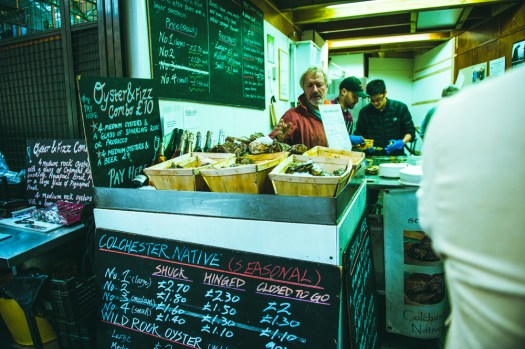
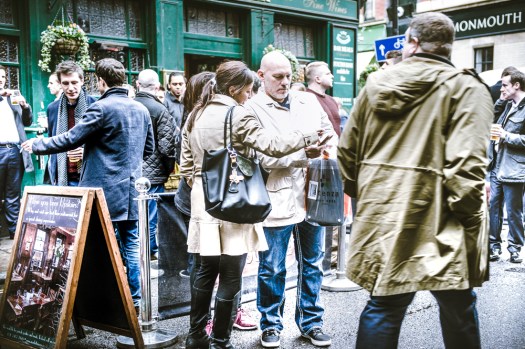
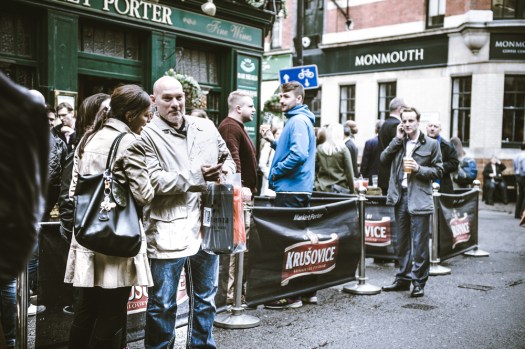
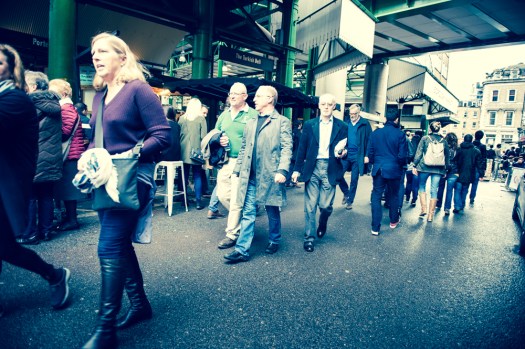
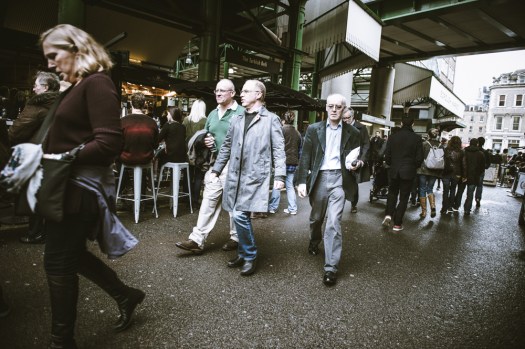
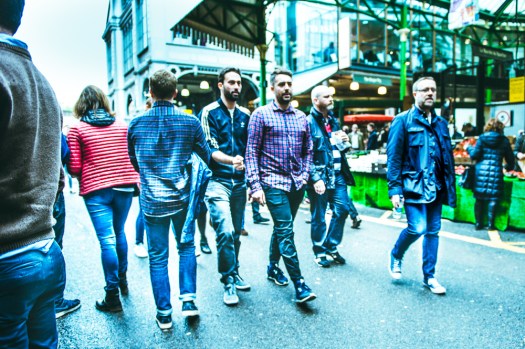
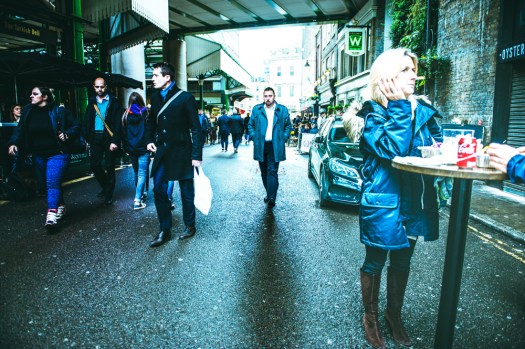
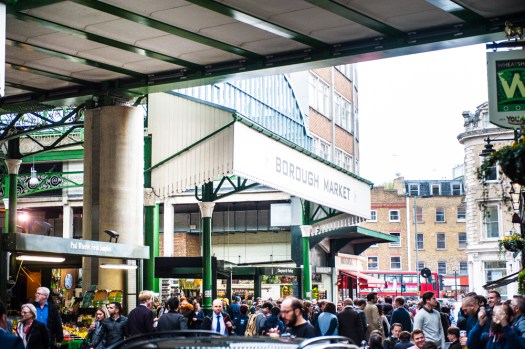
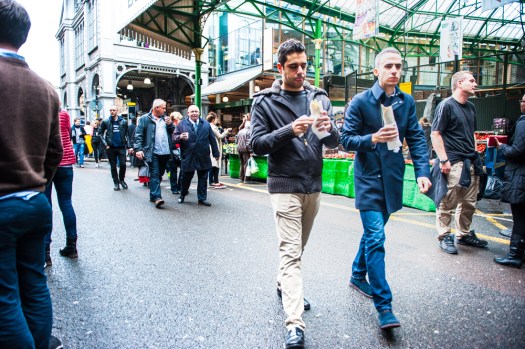
Here’s photos of Borough Market, London.




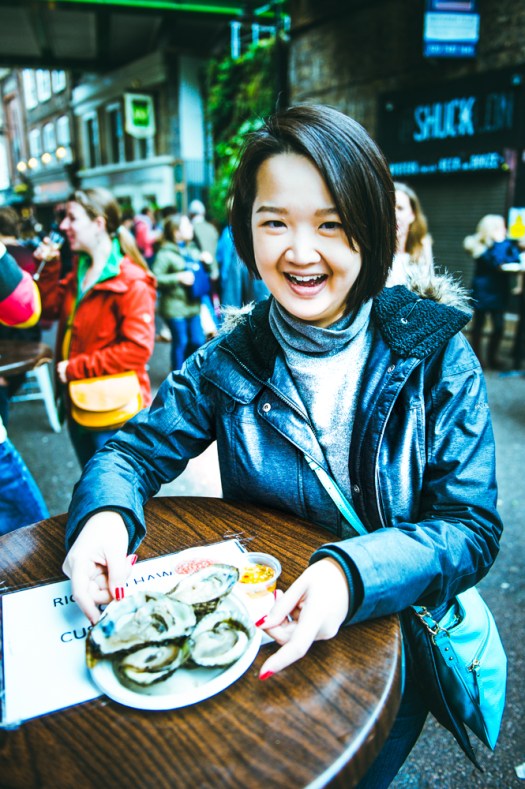



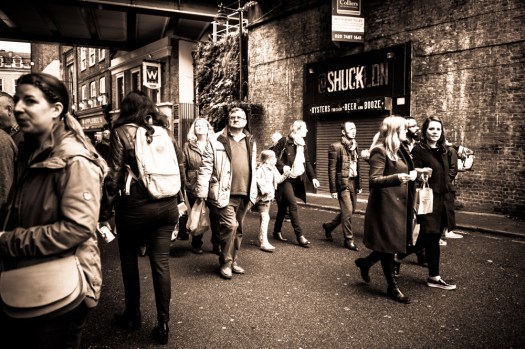

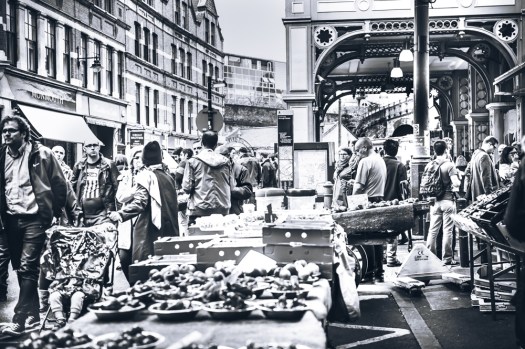

- Borough Market caters to everyone’s needs and people come from all over the world to visit this famous landmark.









Singapore Mathematics Tuition Centre
The Math Tutor for Small Group Tuition for PSLE, GCE O level IGCSE IB Diploma IP Programme Additional Maths for Primary and Secondary Levels. Top Singapore Tutor with two decades in education.

Here’s photos of Borough Market, London.
Primary PSLE Results SEAB Syllabus MOE English, Math, Science Tuition specific to Poi Ching School Primary Syllabus. We take pride as fine educators, wise mentors, supporting motivators and creative innovators with your child’s development turning them into top students, focussed and worldly-wise.
Referrals and recommendations from our loyal clients abound with majority of eduKate Tampines students coming from Poi Ching School.

We also locate our tuition centre close to Poi Ching School so that your child has easy access to our top tutors from alma mater colleges RJC, ACJC, SMU, NTU. We are 50m away and takes 5 mins to walk over from Poi Ching.
We are a group of university graduate tutors with expert knowledge in the current MOE syllabus. We teach to understand everything according to the syllabus and then move onto solving challenging sums that students will encounter in their exams.
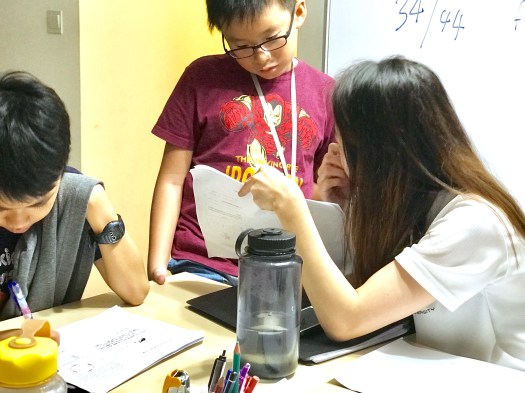
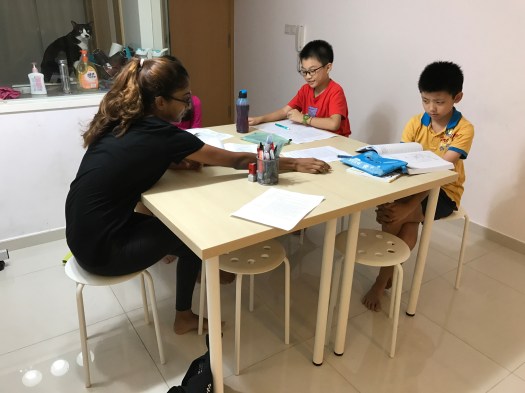
Our classes are conducted in a fully air-conditioned environment with the average tutor/student ratio of 1:5.
Our schedule in eduKate Tampines Tuition Centre caters specifically to Poi Ching’s school timetables and CCA’s. All new students will not have problems getting a suitable time slot in our class. One less headache for students and parents to attend our lessons.
Give us a call to set up a tour around our centre and know more about our unique tuition programmes. Our quality programmes are developed to encapsulate a holistic development of your child’s psyche and let students gain confidence, enthusiastic in learning new things, become gracious and sociable.


Our eduKate Tuition Centre “Team Building and Empowerment” programme for PSLE Primary students:


Call us to join the most progressive tuition centre in Tampines:


Office Hours:
or email us at
Our addresses for eduKate Tuition Centre:


More news on university ranking in Singapore for today as Singapore falls to 15th place according to this article from straitstimes.com with an extract of it below:
by Amelia Teng
“SINGAPORE – Singapore has fallen 12 spots to 15th place in a ranking of the world’s best cities for university students.
Last year the London-based educational consultancy Quacuarelli Symonds (QS) ranked the Republic third in the world and the best in Asia.
However when it released this year’s table this morning it had plummeted, which QS said was due to adjustments made to some factors.
Cities were given scores across five categories for 18 measures, including four new ones that looked at their level of pollution, safety, transparency and tolerance.
Existing indicators included affordability and employability
Wong Kin Leong
eduKate
Tuition Tampines
Tuition Punggol
this is from an article published by Straits Times…
“Remember the days when one B and two Cs would get a student into the arts and social sciences faculty of the National University of Singapore?
Not any more.
This year, A-level holders needed at least an A and two Bs, despite the faculty taking in the largest number of students at the university – 1,700 in all.
Two years ago, the minimum grade needed was three Bs.”
– See more at: http://www.straitstimes.com/news/singapore/education/story/better-scores-now-needed-nus-arts-faculty-20141125#sthash.zw8nv1jr.dpuf
Time are a changing
As expected, the shifts in education in a competitive Singapore are turning its wheels and grinding its gears. There’s no stone left untouched and in time to come, grades needed to enter NUS will only climb higher and its 22nd TOP UNIVERSITY TOP RANKINGS don’t help the matter much. We are an open education system and we have international students vying seats together with our students, and most people will think this is a bad thing but its more of fear that their children does not get a seat. However, this is not true as an open education system allows healthy interaction with the top students around the world, something Singapore needs to achieve a successful international trade programme.
So what does that mean to Singaporean Students?
As we climb higher up the world rankings, our education system becomes more attractive to foreigners and in our open education system, it attracts the best students and we in turn, will interact with the best in the world. That is a good thing. Competition creates excellence. And to vie for a seat in NUS will mean the cream of the crop of Singapore will be competing with the cream of the crop of the world. And that is our bread and butter. We survive because we have to be the best. To be the best, we need to compete with the best. Having a 22nd world ranking university, Singapore’s education system is at a better place right now than the last century and our students will enjoy all this excellent education infrastructure.
Top Education at our doorstep.
Just 20-30 years ago, we had to fly overseas to go to a properly good university with a properly good world ranking. We don’t need to anymore with NUS ranked at 22 at our backyard. I forgot to mention, NTU is at a not so far 39th for 2014.
That is an achievement that we should be proud of. I can only imagine the brains, the work and the funds needed to build two World Top50 University in Singapore. So this brings us to what is next? For a country where our natural resource is human resource, education and training lies high up the ladder for our future survival. But I foresee ourselves in safe hands with world class universities as part of our portfolio, but only if we have the system to create and nurture world class students to be able to qualify for these universities that we will reap the rewards, or else all those seats will be snapped up by the best of the rest of the world. Hardwork, proper training, and determination to be the best shall be dogma.
Sonnet 123 No, Time, thou shalt not boast that I do change
No, Time, thou shalt not boast that I do change:
Thy pyramids built up with newer might
To me are nothing novel, nothing strange;
They are but dressings of a former sight.
Our dates are brief, and therefore we admire
What thou dost foist upon us that is old,
And rather make them born to our desire
Than think that we before have heard them told.
Thy registers and thee I both defy,
Not wondering at the present nor the past,
For thy records and what we see doth lie,
Made more or less by thy continual haste.
This I do vow and this shall ever be;
I will be true, despite thy scythe and thee.
-Shakespeare
by Wong Kin Leong, eduKate
Tuition Tampines
Tuition Punggol
Here’s some perspective of our education in Singapore. All data obtained from http://www.singstat.gov.sg
Singapore literacy rate (for 15 years and above) is at 96.5% with males at 98.5% and females at 94.6%. However, there is no change for males literacy from previous years but females upped 0.2% from 94.4% previously.
Singaporeans with Secondary education or higher (for 25 years and above) has increased from 67.7% to 68.8% with males 71.8% and females 66%.
Our mean years of studying are 10.5 years with males at 11.0 years and females at 10.0 years.
Also interesting, our social indicators have improved with 20 doctors for every 10,000 population as compared to 19 doctors from the previous data.
by Wong Kin Leong eduKateSG
Pinevale Tampines
Whether you are preparing for GCE, GCSE, IB, PSLE, SAT, or any examination, it is imperative to get your brains fit for the exams. Try these few websites for free brain teasers:
1) Brainmetrix.com contains general games that tests most of brain activities. IQ based, Cognitive and even Sudoku can be found free in here.

2) GamesForTheBrains.com is also a general brain teaser free games website that are simple for children to navigate. Just click on the links you find on the frontpage and you are all set to go.

3) BrainHQ.com is another website but it is slick and organised into memory, attention, brain speed, people skills, intelligence, and navigation exercises. However, it does need a sign up to get the basic tier games, and to access the full site there is a purchase involved.

by Wong Kin Leong eduKateSG Pinevale Tampines.
1) Get yourself a dedicated studystation.
Have your assessment books ready and arranged at arms length. Have all your equipment organized within a radius of 1.5 metres. Have water, food and whatever you need to be comfortable near you so that you don’t have to walk away to pick things up. Have a dedicated studystation that does not need packing and unpacking every time you study. It is yours and you do not need to put all your books away after you are done studying.
That way, the moment you sit down, you are all set to study. Walk away when you are tired, and when you are refreshed, come back and study. No packing. No unpacking. It is always there. The easier you settle down to do your studies, the less time and energy you waste walking around getting your studying organized. Because it is always there for you and organized as well in a small footprint of your house. You don’t have to grab things from all over the house when it is located only in one place.
2) PSLE is like any other examination.
Every time you go for examinations, treat it as if it is your PSLE. Primary 6 has 4 main exams before the PSLE. CA1, SA1, CA2, Prelimns. Treat all these exams like PSLE. Study hard, prepare for it, and keep evaluating where you can improve yourself. With experience, PSLE will be a breeze and you’ll get it done proper. Organize yourself into studying for English PSLE, Mother Tongue PSLE, Science PSLE and Mathematics PSLE and when the day comes, psyche yourself up and get those grades.
3) Improve your memory.
Without a good memory, it will always be the problem of learning something and forgetting it altogether. So why start to begin with? Spend time memorizing what you learn and do it the same day that the topic was taught to you. Also learn tricks to improve your memory.
Generally speaking, to memorize anything is basically a case of not forgetting. Hence, the more we spend time repeating something, the lesser the chance that we will forget something. Come back again and test yourself another day just to make sure you remember it and over time, it will be in your long term memory banks.
4) Speed is mind over matter.
Not completing a paper is the worse way one can lose marks. PSLE in Singapore generally runs within a week and the papers are completed in 1-2 hours. There are situations where students mismanage time and spends too much time on questions. To solve this problem, allocate time for your studies and set an alarm whenever you attempt a question.
General guidelines are: 1 mark for every minute.
So if you attempt a 5 mark question, you are only allowed 5 minutes to complete it. Past that, you will need to jump this question and start doing the next question. Come back and attempt it when you have completed the rest of the questions.
5) Ask and you shall receive.
This is by far the most important thing to do for PSLE preparation. Teachers, parents, friends and family will not know what you don’t know unless you ask. The more you communicate your needs, the more people can help. Tell them what problems you face. There is no problem so big it cannot be solved and no problems too silly that they will make fun of you. Everyone has to start learning from basics sometime before they become masters. And master you will.
“He who asks a question is a fool for five minutes; he who does not ask a question remains a fool forever.” – Chinese proverb
Herein lies important dates for Singapore schools and our operating schedules for 2015. Parents take note that eduKate SG operates on all days except public holidays stated in SECTION 3.2
(all information are subject to changes from MOE and is only intended to be used as a rough guideline. dated 4th Nov 2014)
extract from MOE website:
1.0) The school year for 2015 for all MOE primary and secondary schools will start from Friday, 2 January and end on Friday, 20 November 2015. This takes into account 40 weeks of curriculum time for teaching and learning before the start of the national examinations, and six weeks of school vacation at end of year for teachers and students.
| PRIMARY & SECONDARY | |
|---|---|
| Semester I | |
| Term I | Fri 2 Jan – Fri 13 Mar |
| Term II | Mon 23 Mar to Fri 29 May |
| Semester II | |
| Term III | Mon 29 Jun to Fri 4 Sep |
| Term IV | Mon 14 Sep to Fri 20 Nov |
| JUNIOR COLLEGE (JC) Year 1 & Millennia Institute (MI) Year 1 | MI Year 2 | JC Year 2 & MI Year 3 | ||
|---|---|---|---|---|
| Semester I | ||||
| Term I | Mon 2 Feb – Fri 13 Mar | Mon 5 Jan – Fri 13 Mar | ||
| Term II | Mon 23 Mar to Fri 29 May | |||
| Semester II | ||||
| Term III | Mon 29 Jun to Fri 4 Sep | |||
| Term IV | Mon 14 Sep to Fri 20 Nov | Mon 14 Sep to end of ‘A’-level exams | ||
2.0) The four vacation periods for schools, junior colleges and centralised institute for 2015 will be as follows:
| PRI & SEC | |
|---|---|
| Between Terms I & II | Sat 14 Mar – Sun 22 Mar |
| Between Semesters I & II | Sat 30 May – Sun 28 Jun |
| Between Terms III & IV | Sat 5 Sep – Sun 13 Sep |
| At End of School Year | Sat 21 Nov – Thu 31 Dec |
| JC Year 1, MI Year 1 & MI Year 2 |
JC Year 2 & MI Year 3 |
|
|---|---|---|
| Between Terms I & II | Sat 14 Mar – Sun 22 Mar | |
| Between Semesters I & II | Sat 30 May – Sun 28 Jun | |
| Between Terms III & IV | Sat 5 Sep – Sun 13 Sep | |
| At End of School Year | Sat 21 Nov – Thu 31 Dec | End of ‘A’ Level exams – Thu 31 Dec |
3.0) The scheduled school holidays and public holidays for 2015 will be as follows:
| Youth Day | Sun 5 Jul (The following Monday, 6 Jul 2015 will be a scheduled school holiday) |
|---|---|
| Teachers’ Day | Fri 4 Sept |
| Children’s Day for primary schools and primary sections of full schools only) |
Fri 9 Oct |
| Term I | New Year’s Day | Thu 1 Jan |
|---|---|---|
| Chinese New Year | Thu 19 Feb | |
| Fri 20 Feb | ||
| Term II | Good Friday | Fri 3 Apr |
| Labour Day | Fri 1 May | |
| Vesak Day | Mon 1 Jun | |
| Term III | Hari Raya Puasa | Fri 17 Jul |
| National Day | *Sun 9 Aug | |
| Term IV | Hari Raya Haji | Thu 24 Sep |
| Deepavali | **Tue 10 Nov | |
| Christmas Day | Fri 25 Dec | |
| *The next day, Mon 10 Aug 2015, will be a public holiday. **Tentatively, Deepavali will fall on 10 November in 2015. This date will need to be reconfirmed against the Hindu Almanac when it is available. Should there be a change in date, the Ministry of Manpower will issue a media release to announce the change accordingly. |
||
4) The school terms and holidays for 2015 is available on the MOE’s website atwww.moe.gov.sg/schools/terms-and-holidays/2015/
prepared by Wong Kin Leong
edukate SG
Tampines St 73
Singapore
English Tuition News update November 2014:
Dear Parents,
Please be informed of the new format change in Primary School English, Singapore for 2015. This applies to PSLE English exam format and class practices, most noticeable in the Composition and Comprehension section. This change shall affect and include the PSLE syllabus for English, 2015 by Ministry of Education, MOE Singapore.
So parents buying the new assessment books or textbooks, kindly purchase only the latest revision or wait till the new books are out before purchasing. Currently, I still see the 2014 Assessment books being sold in the stores and it will be a waste buying that version to replace with the new ones later on.
Here is a summary of the changes, as informed by the MOE. A copy of the syllabus is included at the bottom of this page. (downloaded from SEAB website)
English skill levels are the same as PSLE 2014. The syllabus remains as the STELLAR programme introduced by MOE in 2013 for Primary 4 students. This is the chronological order of revisions to MOE’s EL Syllabus.
New Assessment books for PSLE ENGLISH SEAB Syllabus 2015
2015 changes to PSLE EL and FEL Papers are as follows:


Here is a copy of the PSLE English Syllabus by MOE:
Implemented from the Year of Examination 2015
In Paper 1 (Writing)
In Paper 2 (Language Use and Comprehension)
In Paper 3 (Listening Comprehension)
In Paper 4 (Oral Communication)
|
PAPER
|
COMPONENT
|
ITEM TYPE
|
NO. OF ITEMS
|
MARKS
|
WEIGHTING
|
DURATION
|
|
1 (Writing)
|
Situational Writing Continuous Writing
|
OE OE
|
1 1
|
15 40
|
27.5%
|
1 h 10 min
|
|
2 (Language Use and Comprehension)
|
Booklet A: Grammar Vocabulary Vocabulary Cloze Visual Text Comprehension Booklet B: Grammar Cloze Editing for Spelling and Grammar Comprehension Cloze Synthesis / Transformation Comprehension OE
|
MCQ MCQ MCQ MCQ OE OE OE OE OE
|
10 5 5 8 10 12 15 5 10
|
10 5 5 8 10 12 15 10 20
|
47.5%
|
1 h 50 min
|
|
3 (Listening Comprehension)
|
Listening Comprehension
|
MCQ
|
20
|
20
|
10%
|
About 35 min
|
|
4 (Oral Communication)
|
Reading Aloud Stimulus-based Conversation
|
OE OE
|
1 passage 1 visual stimulus
|
10 20
|
15%
|
About 10 min (5 min preparation time; about 5 min examination time)
|
|
Total
|
200
|
100%
|
September 3, 2012
Learning of English to Develop 21st Century Competencies
STELLAR English for Upper Primary to Start from Primary 4 Next Year
1) Upper primary students can look forward to more interactive English lessons with the implementation of the revised 2010 English Language (EL) Syllabus at Primary Four from 2013. The new syllabus incorporates a sharper focus on 21st century competencies to enable our students to communicate effectively and confidently in the globalised world. Students who are taught the new syllabus will sit for the revised Primary School Leaving Examination (PSLE) EL papers in 2015.
2) The Ministry of Education (MOE) reviews the EL Syllabus regularly to ensure that it is relevant to the changing environment and profile of our learners. The 2010 EL Syllabus builds on the strengths of the 2001 syllabus, and aims to equip our students with the language skills they need for day-to-day communication and for the next stage of learning. It emphasises building a strong foundation in the language and enriching language learning for all as recommended by the EL Curriculum and Pedagogy Review Committee in 2006.
3) The key feature of the new EL Syllabus is a systematic approach to teaching language skills, using rich texts and a variety of language resources to enable students to appreciate the language beyond the classroom. This approach is delivered through the Strategies for English Language Learning and Reading (STELLAR) programme in primary schools.
4) The STELLAR programme, developed by MOE, provides the instructional materials, teaching strategies and training to enable teachers to implement the EL syllabus effectively. The STELLAR programme is designed to cater to a diverse range of EL learners in our school system and was developed based on research carried out in Singapore schools. As part of the programme, EL is taught through stories and texts that appeal to children, with explicit grammar instruction. Students are provided with opportunities to express themselves in an environment where language learning can be enjoyable yet purposeful. Through the reading of engaging stories in class, students get to speak extensively, discussing and sharing their views with the teacher and their peers. The main purpose is to build students’ confidence in speech and writing, and enhance their learning of the language. Please refer to Annex A for an overview of the 2010 EL Syllabus. More information on the STELLAR programme can be found at the STELLAR website.
5) The revised PSLE English Language (EL) and Foundation English Language (FEL) examination papers will be introduced from 2015, in line with the changes to the teaching syllabus. The language skills tested in the revised PSLE are the same as those tested in the current PSLE. However, the revised examination papers give greater emphasis to the 21st century competencies in the teaching syllabus by:
6) The changes to the examination papers are outlined in Annex B.
Annex B
Revised PSLE English Language (EL) and Foundation English (FEL) Examinations
The revised English Language (EL) examination comprises four papers. The main revisions are as follows:
The revised Foundation English Language (FEL) examination comprises four papers. The main revisions are as follows:
The revisions are summarized below:
|
English Language |
Foundation English Language |
|
|
Giving students greater scope for providing personal response in speaking and writing |
Paper 1(Continuous Writing): Greater scope for writing from different perspectives, and flexibility for candidates to choose any text type such as narrative or exposition. Paper 4 (Oral Communication): New Stimulus-based Conversation component will feature a context familiar to students that will provide a springboard for conversation. |
Paper 1(Continuous Writing): The picture series ends with a frame with a question mark to allow candidates the flexibility to give their own endings to their compositions. Paper 4 (Oral Communication): New Stimulus-based Conversation component will feature a context familiar to students that will provide a springboard for conversation. |
|
Greater emphasis on viewing skills integrated with listening and reading |
Paper 2 (Language Use and Comprehension): New Visual Text Comprehension section that features a multi-modal print text which will include visuals such as pictures, diagrams, charts, graphs and tables together with the written texts. Paper 3 (Listening Comprehension): Increase in the number of questions with graphic representation. |
Paper 2 (Language Use and Comprehension): Pictures may be featured together with the Comprehension passages, where appropriate, to help students comprehend the texts. Paper 3 (Listening Comprehension): Increase in the number of questions with graphic representation. |
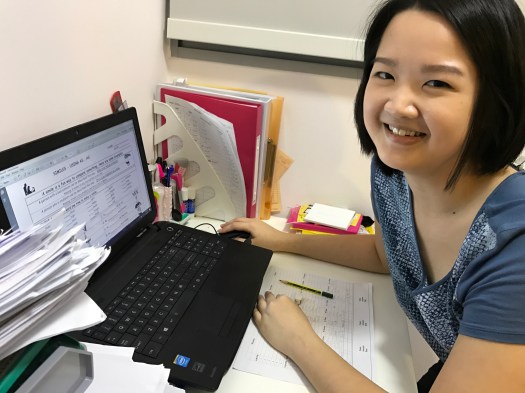

 Singapore Mathematics Tuition Centre