The Math Tutor for Small Group Tuition for PSLE, GCE O level IGCSE IB Diploma IP Programme Additional Maths for Primary and Secondary Levels. Top Singapore Tutor with two decades in education.
Top 10 Idioms for PSLE English Syllabus, Singapore-eduKate Teaching Materials.
Idioms can add spice onto the canvas of your composition writing and when appropriately used, gives a dramatic effect and shows the mastery that you have attained. The idea here, while attempting PSLE, is to have a list of go-to tools that would cover almost every situation that you can come across. This helps pepper your composition, adding flavour and widen the spectrum of colour to your writing.
idiom-ˈɪdɪəm
-a group of words established by usage as having a meaning not deducible from those of the individual words (dictionary.com) Here’s 10 most useful idioms that you can use to almost every composition that you will see in PSLE.
A penny for your thoughts: asking someone’s thoughts
Best of both worlds: All advantages are in effect.
Can’t judge a book by its cover: Cannot judge something/someone on appearance alone.
Curiosity killed the cat: Being Inquisitive can lead you into an unpleasant situation.
Don’t put all your eggs in one basket: Do not put all your resources in one possibility.
Every cloud has a silver lining: Be optimistic, even difficult times will lead to better days.
In the heat of the moment: Overwhelmed by what is happening in the moment.
Kill two birds with one stone: To accomplish two different things at the same time.
Let the cat out of the bag: To share information that was previously concealed
Piece of cake: A job, task or other activity that is easy or simple.
This month, we are teaching eduKate students Critical Thinking Skills. Students will be receiving their notes and shall cover the below modules:
What is critical thinking?
What are the components of learning?
What are the procedures to achieve critical thinking?
How to interpret and analyse data?
What do we need to avoid doing to achieve a balanced result?
Importance of critical thinking in our education.
Aims of this module: To create awareness in students attempting questions in their exams. Relevance of critical thinking skills to English shall be applied to composition writing and answering comprehension questions during the first two lessons.
Composition
Students are required to demonstrate reasoning in their compositions and develop a realistic approach to story telling. During the process of creating a story, students shall use the 3 pictures composition approach introduced in the new syllabus PSLE format. The students are required to gather and include effective implementation of tools from their creative writing classes. They also need to draw from their past experiences when fabricating their plot.
Comprehension
Students are required to demonstrate critical thinking skills of the following basic 6 questions: who, why, where, when, what and how when attempting to resolve questions in the new syllabus format PSLE questions. They are also required to critique and infer from the passage using the said skill.
Have Science Tuition at our eduKateSG Punggol Tuition Centre.
This week in Science, we learn about the plant’s transport system and zoomed in on how water is transported from the roots to the other parts of the plant through the xylem tubes. To demonstrate this, we conducted a simple and fun activity that is easy to carry out at home as well.
Materials required:
Fresh white chrysanthemum or carnation
Water
Food coloring
Plastic bottle
Procedure:
Pour 1 cup of water into the plastic bottle and mix in 1/4 cup of food coloring.
Trim the stalk of the flower using a pair of kitchen scissors at an angle such that the base is pointed and not flat. (Water absorption may be affected if the base is flat and the stalk sits at the bottom of the bottle.)
Place the flower in the colored water and watch the petals change color!
Singapore Botanical Gardens organizes a programme for students, a holiday special with Orchids as their main theme.
extract from their website:
Description:
Did you know that orchids are one of the largest and most diverse families of flowering plants in the world?
From 8 to 23 November 2014, we are extending free admission to National Orchid Garden to students and accompanying adults.
Opening hours: 8.30am to 7.00pm daily (last admission is at 6.00pm).
Free admission criteria
1. Children 12 years old and below
2. Students are required to present valid student cards
3. Adults accompanying children and/or students
This is a fairly hidden gem in Singapore’s local highlights but its a truly brilliant gem indeed. Three shophouses at Pagoda Street recreates our Singapore history in complete historical settings. How our forefathers lived and eat is faithfully recreated in this beautiful building. Your kids will learn how Singapore started and its rich cultural history, and there’s even a kopitiam in the building when you get hungry or thirsty.
7) Haji Lane
Food? Check. Culture? Check. Shopping? Check. Art? Check. Haji Lane is a smörgåsbord of all things new and old, chic and traditional, young and elderly. It is the cross junction of our past, present and future. There’s lots of things to do for everyone and with Orchard and Marina Bay area a stone’s throw away, Haji Lane has established itself as a fringe community with a strong-willed resolve to show the world that there’s more to do in Singapore than eating, banking, shopping, shipping, flying and going to the movies. Walk into its varied food joints to taste local food, or run into its many beautiful arty cafe’s. Or just walk around and soak in the art installations by the side of the buildings. Shopping is a good idea too, with plenty to offer along the shophouses.
My army camp was located here before it revamped itself into Dempsey Hill, the placed to go when you want to get away from the city and cosy up to some beautiful restaurants and shops. Its old world charm redefined for the present. My favourite cafe there will definitely be” jones the grocer”. And its not even exactly a cafe as they sell grocery and speciality food items.
To be Continued… wait for the next installment where we reveal the top 5. Hang in there.
Go paperless and your kids can write/draw/doodle without worrying if you are clearing a forest to do that.
2) Skatecycle
Another form of skates hits the streets. It looks like it came out from the movie TRON.
3) Giant Jenga
Ellen plays it on her show. And everyone goes nuts when it goes all wobbly. So go big… get a Giant Jenga and see everyone gather together and go wide eyed gaga. Jenga! Jenga! Jenga!
4) Lego
Lego is making a big comeback, in games, in movies, in toys, in theme parks and why not, its really an awesome way to get creative for your kids. Nothing is impossible with Lego and its all here… http://www.lego.com/
The latest camera from this uber fashionable art/camera/lifestyle gadget. Selfie yourself and have it on Fuji Instax format. Oh did I mention it looks so pretty? It does!
Lomo’Instant Wong Kin Leong eduKateSg
article written by Wong Kin Leong, eduKateSG Tampines St73
Herein lies important dates for Singapore schools and our operating schedules for 2015. Parents take note that eduKate SG operates on all days except public holidays stated in SECTION 3.2
(all information are subject to changes from MOE and is only intended to be used as a rough guideline. dated 4th Nov 2014)
extract from MOE website:
School Terms and Holidays For 2015
1.0)The school year for 2015 for all MOE primary and secondary schools will start from Friday, 2 January and end on Friday, 20 November 2015. This takes into account 40 weeks of curriculum time for teaching and learning before the start of the national examinations, and six weeks of school vacation at end of year for teachers and students.
1.1) School Calendar 2015
PRIMARY & SECONDARY
Semester I
Term I
Fri 2 Jan – Fri 13 Mar
Term II
Mon 23 Mar to Fri 29 May
Semester II
Term III
Mon 29 Jun to Fri 4 Sep
Term IV
Mon 14 Sep to Fri 20 Nov
JUNIOR COLLEGE (JC) Year 1 & Millennia Institute (MI) Year 1
MI Year 2
JC Year 2 & MI Year 3
Semester I
Term I
Mon 2 Feb – Fri 13 Mar
Mon 5 Jan – Fri 13 Mar
Term II
Mon 23 Mar to Fri 29 May
Semester II
Term III
Mon 29 Jun to Fri 4 Sep
Term IV
Mon 14 Sep to Fri 20 Nov
Mon 14 Sep to end of ‘A’-level exams
1.2) School Vacation 2015
2.0)The four vacation periods for schools, junior colleges and centralised institute for 2015 will be as follows:
PRI & SEC
Between Terms I & II
Sat 14 Mar – Sun 22 Mar
Between Semesters I & II
Sat 30 May – Sun 28 Jun
Between Terms III & IV
Sat 5 Sep – Sun 13 Sep
At End of School Year
Sat 21 Nov – Thu 31 Dec
JC Year 1,
MI Year 1 & MI Year 2
JC Year 2 &
MI Year 3
Between Terms I & II
Sat 14 Mar – Sun 22 Mar
Between Semesters I & II
Sat 30 May – Sun 28 Jun
Between Terms III & IV
Sat 5 Sep – Sun 13 Sep
At End of School Year
Sat 21 Nov – Thu 31 Dec
End of ‘A’ Level exams – Thu 31 Dec
3.0) The scheduled school holidays and public holidays for 2015 will be as follows:
3.1) Scheduled School Holidays 2015
Youth Day
Sun 5 Jul (The following Monday, 6 Jul 2015 will be a scheduled school holiday)
Teachers’ Day
Fri 4 Sept
Children’s Day for primary schools and primary sections of full schools only)
Fri 9 Oct
3.2) Public Holidays 2015
Term I
New Year’s Day
Thu 1 Jan
Chinese New Year
Thu 19 Feb
Fri 20 Feb
Term II
Good Friday
Fri 3 Apr
Labour Day
Fri 1 May
Vesak Day
Mon 1 Jun
Term III
Hari Raya Puasa
Fri 17 Jul
National Day
*Sun 9 Aug
Term IV
Hari Raya Haji
Thu 24 Sep
Deepavali
**Tue 10 Nov
Christmas Day
Fri 25 Dec
*The next day, Mon 10 Aug 2015, will be a public holiday. **Tentatively, Deepavali will fall on 10 November in 2015. This date will need to be reconfirmed against the Hindu Almanac when it is available. Should there be a change in date, the Ministry of Manpower will issue a media release to announce the change accordingly.
Modernise your writing with new phrases or idioms.
Time shifts language and adopts new words/phrases. As we continue into the 21st Century, usage of idioms have changed significantly in our society and time dictates certain idioms/phrases to be out of date and some that becomes fashionable.
Here’s a few fun ones:
take things easy
suck it up
keep in touch
speak of the devil
slip past
send me up the wall
you got me
hit it off
mixed up in
in summary
These phrases are definitely useful and fashionable right now, and gives a contemporary and modern feel to your writing. If your composition is written in a modern setting, keep the words trendy and fresh.
Or it depends on the characters that you use in your composition. When the person is older, he/she can take on an older vocabulary/phrase/idiom. But when the character is younger, then keep it trendy, like “Whoa! Nellie”.
So keep that in mind when you write your next composition. Certain phrases might sound archaic and eventhough it is contextually correct, it just gives a slightly musty feel to your writing, dusty covers and all.
English Tuition with Yuet Ling doing Cloze Passages.
Punggol Tuition Centre for English Math and Science
In this article, I shall talk about the importance of lag time in performance management of students in the course of an academic year. This article talks about how students should manage their time when it comes to examination management. It is also a technology that parents can employ to improve their child’s performance if applied successfully. The studying technology prevalent is still time management and prioritising syllabus uptake but problems arise when we don’t factor in lag time and peak performance. It is a 2 dimensional approach in studying that does not factor in student’s lag time in skill mastery and fails to explain why students does not perform well in examinations.
Solution
Instead we shall now start thinking in the 3D form of logistical delivery of information to our brains and peak performance acquisition. Lag time, as defined in this case as the time between studying a new topic to the time when a student attains mastery of the topic, should be put into consideration for students to do well in their examinations. We know that a student learning a new topic will take some time to digest the new material and eventually gain enough skills to score well. But this mastery requires the function of time and depending on students’ skills, the time required will be different as no two students are the same in attainment of skill mastery. It is a logistical task that needs to be tailored to individual students and one which requires us to know what is needed, when it is needed, and where it is needed.
Once we understand that lag time is important, we now need to introduce the mechanism of peak performance. Peak performance is defined as the point in time when one reaches its peak in absolute performance. This also means that once the peak is reached, there will generally be followed by a reduction/degradation of the skill with the passing of time. The aim of a successful examination will be down to these factors.
knowledge of our lag time
when our peak performance occurs
time management factoring in the above
prioritising in accordance to achieve peak performance
So what have we learnt from our research:
1) Exams are a constant in the year. With the constant of examination time tables, lag time must be worked out and calculated to prevent a student from failing to attain the necessary skill set before the examination begins. Knowledge of oneself is the greatest liberty. Students should know how much time is needed to attain mastery of skills. Also, this is when parents can step in and take this lag time into consideration. For a student who learns quick and have a good uptake of facts, this lag time will play a smaller role in the process of learning, but one who takes a fair amount of time to attain mastery, parents should play a bigger part in making sure their child manage their time well enough.
First, know when the exams and tests are in an academic year. Second, calculate how much time is needed to fully master, and commit to memory the skills acquired. Third, take this calculated time that you need, and work backwards from the dates of the exams to start planning revision of your topics according to when you peak in your mastery. Factor in 2-3 extra weeks for delays in your schedule as a safety net. Also factor in the amount of subjects that is being attempted, time it to how the exams pan out. Study in accordance to what papers are chronologically arranged What you have will be a solid blue print to a successful examination.
2) Lag time decreases with a better memory Generally, students with better memory requires less lag time to master their syllabus. This is obvious as students who spends more effort memorising what they have learnt means that they do not have to spend so much time backtracking to relearn what they have forgotten.
3) Lag time decreases with better understanding There is studying by hard, or studying by smart. The latter being studying by understanding and comprehending, as opposed to the former of memorising questions and formulas. Studying by understanding generally gives clarity and a better fundamental grasp of the topic. And clarity in thought gives a better memory palace. Know how the topic works, digesting it and then memorizing and keeping it clear will usually means a recall of the topic will be easier.
4) Consistency wins. Mugging scares. Consistently studying and peaking will help a student learn how to reach peak performance. Do it, and do it again. Hone it till it becomes second nature and exams become a breeze. Mugging is scary because it leaves too little time to learn everything. It works, but there’s also a chance that it doesn’t. Why gamble when we can play it safe and buy insurance.
So there you go. Take into consideration lag time, and peak right on exam day. Success is just around the corner.
Herein lies the class contents and SEAB MOE Syllabus of our 2015 tutorial classes for English, Maths and Science tuition at both eduKate Tampines and Punggol Branch. MOE PSLE syllabus will be adhered to strictly with additions as listed below applied for your child’s character development and skill improvements. PSLE Syllabus by SEAB MOE can be found at bottom of this page.
Primary English
eduKate’s syllabus covers MOE guideline PSLE Syllabus English 2015 as our core lesson content.
Vocabulary
Grammar
Synthesis
Composition (Situational and Continuous)
Comprehension
Cloze Passage
Listening Comprehension
Oral and speech
In addition, we incorporate the following into our English programme:
Creative writing
Historical Knowledge
General Knowledge
Moral Ethics and Good Manners
Introduction to Newspapers and Current Affairs
Reading & Appreciation of Classical Children Story Books
English and its use in Technology and Social Media
Primary Mathematics
eduKate’s syllabus for Mathematics follows MOE guideline in accordance to cohort requirements from Primary 1-6.
In addition, we shall incorporate the following into our Mathematics programme:
Conceptual Understanding and Skill Proficiency
Heuristics and application to Problem Sums
Every day use of Mathematics
PSLE Preparatory Mathematics Classes in October 2014
PSLE Intensive Mathematics Classes in June-October 2015
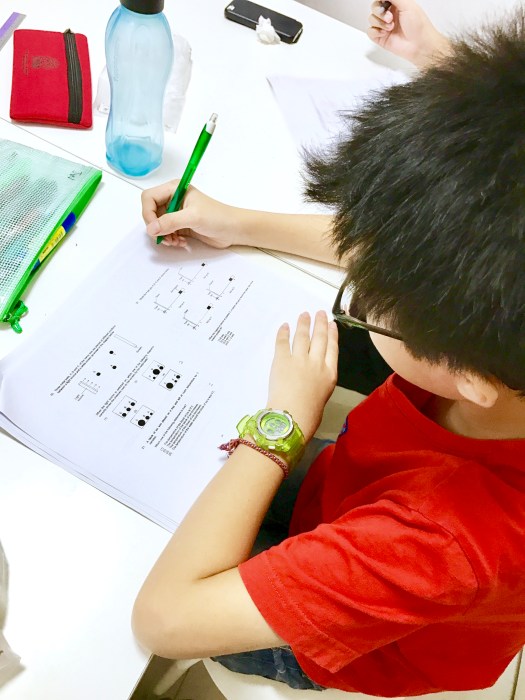
eduKate Singapore Tampines Tuition Centre Student doing Secondary Math
Below are a list of schools that we currently cater to in accordance to our current location
Tampines Tuition Branch:
Angsana Primary School
Chongzheng Primary School
East Spring Primary School
East View Primary School
Gongshang Primary School
Junyuan Primary School
Poi Ching School
St. Hilda’s Primary School
Tampines North Primary School
Tampines Primary School
Yumin Primary School
Dunman Secondary School
East Spring Secondary School
East View Secondary School
Junyuan Secondary School
Ngee Ann Secondary School
Pasir Ris Secondary School
Springfield Secondary School
St. Hilda’s Secondary School
Tampines Secondary School
Tampines Junior College
United World College of South East Asia (Tampines Campus)
Canossa Convent Primary School
East Coast Primary School
Eunos Primary School
Geylang Methodist School (Primary)
Haig Girls’ School
Macpherson Primary School
Maha Bodhi School
Maris Stella High School
Ngee Ann Primary School
St. Gabriel’s Primary School
Tao Nan School
Yangzheng Primary School
Bartley Secondary School
CHIJ Katong Convent
Geylang Methodist School (Secondary)
MacPherson Secondary School
Manjusri Secondary School
Ping Yi Secondary School
St. Gabriel’s Secondary School
Zhonghua Secondary School
Nanyang Junior College
Punggol Tuition Branch:
Casuarina Primary School
Compassvale Primary School
Coral Primary School
Edgefield Primary School
Elias Park Primary School
Greendale Primary School
Horizon Primary School
Loyang Primary School
Mee Toh School
Meridian Primary School
North Vista Primary School
Palm View Primary School
Park View Primary School
Pasir Ris Primary School
Punggol Primary School
Punggol Green Primary School
Punggol View Primary School
Seng Kang Primary School
White Sands Primary School
Yio Chu Kang Primary School
Compassvale Secondary School
Coral Secondary School
Edgefield Secondary School
Greendale Secondary School
Greenview Secondary School
Hai Sing Catholic School
Loyang Secondary School
North Vista Secondary School
Pasir Ris Crest Secondary School
Punggol Secondary School
Seng Kang Secondary School
Siglap Secondary School
Meridian Junior College
North Spring Primary School
Rivervale Primary School
CHIJ St. Joseph’s Convent
Anchor Green Primary School
Fernvale Primary School
Nan Chiau Primary School
Sengkang Green Primary School
Springdale Primary School
Nan Chiau High School
Pei Hwa Secondary School
Secondary Mathematics GCE O levels at eduKate SG Tuition Centre
Current PSLE Syllabus outlined by SEAB MOE website Jan 2015 onwards
PSLE ENGLISH LANGUAGE
Implemented from the Year of Examination 2015
PURPOSE OF EXAMINATION
The purpose of the examination is to assess the candidates’ attainment in English Language based on the Learning Outcomes stated in the English Language Syllabus 2010: Primary & Secondary (Express / Normal [Academic]). The Learning Outcomes form the basis for the assessment objectives listed on page 3.
ASSESSMENT OBJECTIVES
In this English Language examination, candidates will be assessed on their ability to:
In Paper 1 (Writing)
AO1 write to suit purpose, audience and context in a way that is clear and effective
AO2 use appropriate register and tone in a variety of texts
AO3 generate and select relevant ideas, organising and expressing them in a coherentand cohesive manner
AO4 use correct grammar, spelling and punctuation
AO5 use a variety of vocabulary appropriately, with clarity and precision
In Paper 2 (Language Use and Comprehension)
AO1 demonstrate comprehension of a range of texts at the literal and inferential levels
AO2 show understanding of implied meaning, and make judgement and evaluation, byreading and/or viewing closely and critically
AO3 show understanding of how contextual use of lexical and grammatical itemsshapes meaning
AO4 demonstrate the correct use of grammar, spelling and punctuation, and theappropriate use of vocabulary in given contexts
In Paper 3 (Listening Comprehension)
AO1 demonstrate understanding of the content of a variety of spoken texts at the literal and inferential levels
AO2 identify key messages, main ideas and details in a variety of spoken texts
AO3 infer and draw conclusions by listening critically
In Paper 4 (Oral Communication)
AO1 read with good pronunciation, clear articulation and appropriate intonation in order to convey the information, ideas and feelings in a passage
AO2 produce a well-paced, fluent reading of a passage
AO3 express their personal opinions, ideas and experiences clearly and effectively inconversing with the examiner
AO4 speak fluently and with grammatical accuracy, using a range of appropriatevocabulary and structures
EXAMINATION FORMAT
Candidates will be assessed in the following areas:
PAPER
COMPONENT
ITEM TYPE
NO. OF ITEMS
MARKS
WEIGHTING
DURATION
1 (Writing)
Situational Writing Continuous Writing
OE OE
1 1
15 40
27.5%
1 h 10 min
2
(Language Use and Comprehension)
Booklet A:
Grammar
Vocabulary
Vocabulary Cloze
Visual Text Comprehension
Booklet B:
Grammar Cloze
Editing for Spelling and Grammar
Comprehension Cloze
Synthesis / Transformation
Comprehension OE
MCQ MCQ MCQ MCQ
OE OE
OE OE OE
10 5 5 8
10 12
15 5 10
10 5 5 8
10 12
15 10 20
47.5%
1 h 50 min
3
(Listening Comprehension)
Listening Comprehension
MCQ
20
20
10%
About 35 min
4
(Oral Communication)
Reading Aloud
Stimulus-based Conversation
OE OE
1 passage
1 visual stimulus
10 20
15%
About 10 min (5 min preparation time; about 5 min examination time)
Part 1 (Situational Writing): Candidates will be required to write a short functional piece (e.g. letter, email, report) to suit the purpose, audience and context of a given situation.
Part 2 (Continuous Writing): Candidates will be required to write a composition of at least 150 words in continuous prose on a given topic. Three pictures will be provided on the topic offering different angles of interpretation. Candidates may also come up with their own interpretation of the topic.
Paper 2 (Language Use and Comprehension)
Candidates will be assessed on their ability to use language correctly and to comprehend visual and textual information.
Paper 3 (Listening Comprehension)
This paper comprises 20 multiple-choice questions which test candidates’ ability to understand spoken English. The texts may be in the form of news items, announcements, advertisements, instructions, explanations, conversations, speeches and stories. Graphic representations will be used for the first seven items. Each text will be read twice. Time will be given for candidates to read the questions before the first reading of each text.
Paper 4 (Oral Communication)
For Reading Aloud, candidates are assessed on their ability to pronounce and articulate words clearly, as well as their ability to read fluently with appropriate expression and rhythm. For Stimulus-based Conversation, candidates are assessed on their ability to give a personal response to a visual stimulus and engage in a conversation on a relevant topic.
PSLE MATHEMATICS
For Examination from 2009
PURPOSE OF THE EXAMINATION
The purpose of the Mathematics examination is to assess pupils’ attainment in mathematics at the end of primary education with respect to the objectives of the 2007 Mathematics (Primary) syllabus. pdf file-PSLE-maths-primary-2007
ASSESSMENT OBJECTIVES
Pupils should be able to:
recall specific mathematical facts, concepts, rules and formulae, and performstraightforward computations. (Knowledge)
interpret data and use mathematical concepts, rules and formulae, and solveroutine or familiar mathematical problems. (Comprehension)
analyse data and/or apply mathematical concepts, rules and formulae in acomplex situation, and solve unfamiliar problems. (Application & Analysis)EXAMINATION FORMATThe examination consists of two written papers comprising three booklets.
Paper
Booklet
Item Type
Number of questions
Number of marks per question
Weighting
Duration
1
A
Multiple-choice
10
1
10%
50 min
5
2
10%
B
Short-answer
10
1
10%
5
2
10%
2
Short-answer
5
2
10%
1 h 40 min
Structured / Long-answer
13
3, 4, 5
50%
Total
48
–
100%
2 h 30 min
Notes
Both papers will be scheduled on the same day with a break between the two papers.
Paper 1 comprises two booklets. The use of calculators is not allowed.
Paper 2 comprises one booklet. The use of calculators is allowed.
Item Types
Multiple-choice Question
For each question, four options are provided of which only one is the correct answer. A candidate has to choose one of the options as his correct answer.
Short-answer Question
For each question, a candidate has to write his answer in the space provided. Any unit required in an answer is provided and a candidate has to give his answer in that unit.
Structured / Long-answer Question
For each question, a candidate has to show his method of solution (working steps) clearly and write his answer(s) in the space(s) provided.
PSLE SCIENCE
For examination from 2010
PURPOSE OF THE EXAMINATION
The PSLE Science Paper assesses pupils’ attainment in Science with respect to the aims of Primary Science Education as stated in the 2008 Science (Primary) syllabus pdf file- psle-science-primary-2008.
ASSESSMENT OBJECTIVES
The assessment objectives are as follows:
Knowledge with UnderstandingPupils should be able to demonstrate knowledge and understanding of scientific facts, concepts and principles.
Application of Knowledge and Process SkillsPupils should be able to:
apply scientific facts, concepts and principles to new situations.
use one or a combination of the following basic process skills:
Observing
Comparing
Classifying
Using apparatus and equipment
Communicating
Inferring
Predicting
Analysing
Generating possibilities
Evaluating
Formulating hypothesis
EXAMINATION FORMAT Format of Paper
The examination consists of one written paper comprising two booklets, Booklet A and Booklet B.
Table 1
Booklet
Item Type
Number of questions
Number of marks per question
Weighting (%)
A
Multiple-choice
30
2
60
B
Open-ended
14
2,3,4
40
I Booklet A consists of 30 multiple-choice questions. Each multiple-choice question carries 2 marks.
II Booklet B consists of 14 open-ended questions. Each open-ended question carries 2, 3 or 4 marks.
Duration of Paper
The duration of the paper is 1 hour 45 minutes.
the above is downloaded from seab.com.sg and is correct as of 3rd April 2015. Any revisions from this date on shall be updated by educatesg.com and updated with notes. This page is intended for use by edukate Singapore Tuition Centre students and parents for their reference and examination planning schedule. Kindly disregard if otherwise. Thank you.
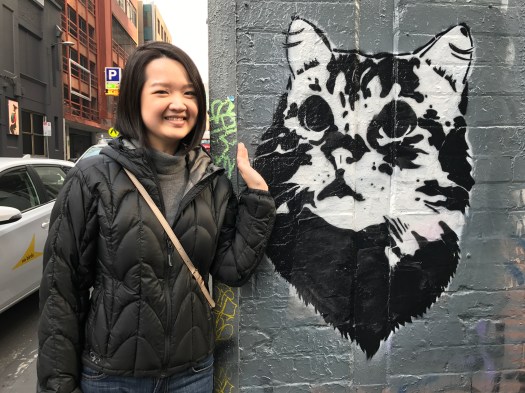
Yuet Ling in Melbourne CBD touring the City, Australia.Tutor Yuet Ling LV Takashimaya. SGP.Tutor Yuet Ling teaching a PSLE Creative Writing class. It is all about the students’ progress. Give it a go, organise their thoughts and arm them with the best knowledge.Tutor Yuet Ling at LV MBSTutor Yuet Ling Stalactites Restaurant Melbourne CBD AustraliaOne of our residents Pebbles.
Its the time of the year, 2 months to go for PSLE or GCE O’ Levels and the panic buttons are being pushed. Here’s a crash course and survival guide:
Make space
Clear out the junk on your table and make your room conducive for studying. This shall be your goto place for study and make sure it is bright and peaceful. A clear table stops any distraction as well. No TV, games, computers, handphones. Just you and your work.
The 5 P’s
Proper Planning Prevents Poor Performance. Write out all the topics that needs to be revised. Calculate how much time that needs. Add in hours to be spent on revision papers and past year exam papers . Divide that by how many weeks more to exams and that is how much time you need to study a day, at the very least. Which leads us to the need for a time table.
Have a timetable
Set up a time table and schedule every minute. Time management is important in making sure all the topics are covered. Do put in little breathers as all work as no play makes Jack/Jane a dull person.
Start with revising topics
Revise topics from the easiest to the hardest. This helps in covering lots of easy topics fast and as confidence grows, work up to the harder stuff.
Get Help
Have a really solid tutor that you can count on. (Contact Us) Generally someone who knows enough of your syllabus that you can get help fast and download as much information to you in the shortest time possible. There will be times when you are revising and there’s some questions where you will hit the wall. Mark those down and ask. This will boost your confidence.
Tutors checking primary science papers from school examinations
Get those past year papers
Once done with revision, time to hit those past year exam papers. If you have a hard time looking for it, send us an email and we can help you out in obtaining them.
eduKate with Minister of Education, Mr Heng Swee Kiat
Sleep your 9 hours worth
Research has proven that peak performance occurs for individuals that clocks in 9 hours of sleep consistently. Your brain will thank you for it.
Study hard now, slow down when it gets nearer to exams
That’s stress management. Plan to cover more at the beginning and slower in the end. As the exam nears, we need to spend lesser on studying and more time organising our memory palace. Making sure everything is at your fingertips when you need it and cooling down to make sure your brains can handle the stress when the exam starts.
The calm before the storm
It is best to spend time prepping for the big day. Both mentally and physically. Run through how you will do your papers in your mind. Eat healthy food, on time and drink lots of water. Staying healthy is key to peak performance. Exercise too but not anything that will break bones and end in a trip to hospital. Staying sharp and well rested will keep any sickness at bay.
eduKate is committed to community development. 2014
Stay happy and optimistic
Its also important to stay happy. So whenever you feel things turning dark, slow down and take a breather. Go hang out with friends and family. Do remember its just an exams and its never the end of the world. If you planned it right and did your best, chances are, you’ll be doing alright.
Student gets good grades with the proper help and good attitude towards his studies.
Synching your body to the exam time tables
Your body is a creature of habit. Wake up and sleep at the same time every day. This includes the weekends. Study at the same time as the exam time table. Sit down for the whole duration of an exam, approximately 2 hours, and do not make any toilet trips during that time. Eat at the same time too as you do not want to get hungry or thirsty during exams. Get your body accustomed to handle the stresses of an exam. Don’t change this until the exams are over. This will lessen distractions and help you in concentrating fully on the exams.
Equipment checklist
Have a checklist of what you need for the exams. Different papers requires different equipment so make sure to bring it along with respect to the paper at hand. Don’t forget your identification papers too. Buy spares and have all your equipment checked for proper working conditions. I always advise students to have duplicates of all their stationery. Better to have more than less or risk repeating another year to retake the exams. Generally speaking, pens are never enough in an exams, and two calculators just in case one gives up mid way.
Bring the right equipment and have backup calculators just in case. Murphy’s Law at work.
The Storm
Listen to everything the examiner says and only start when they say so. Don’t worry about what happens around you and just worry about your own paper. That’s your own paper and that is the most important task to you right there and then. Do it at a good pace and never worry if someone else are done earlier than you. Once you have completed, make sure that all pages are attempted, your name/identification number is on the paper, and check your work until time is up. You are given a set time for the paper and not a single second should be wasted so make sure you squeeze every mark out of that paper.
Home Sweet Home
Once the paper is done, get back home and do not discuss the exam questions with your friends. That’s just counter productive and could demoralise you if you find out that there is things that you got wrong. Crying over spilt milk won’t help you or get you a better grade once the paper is handed in. Besides, you will never see that paper again in your life so forget and look forward to the next exam. You are better off wisely spending that time winding down, resetting and start preparing for the next paper.
Keeping yourself optimistic, healthy and happy is a key to achieving a great result.
eduKate is committed to community development. 2014Punggol Tuition Centre for English Math and ScienceScience students are taught to think like a scientist in our Science tuition. To be a scientist and then think logically to get through the questions that are presented in their Examinations.












 Singapore Mathematics Tuition Centre