The Math Tutor for Small Group Tuition for PSLE, GCE O level IGCSE IB Diploma IP Programme Additional Maths for Primary and Secondary Levels. Top Singapore Tutor with two decades in education.
edukate student goes up Climb Central for Holiday enrichment programme primary school PSLE SEAB
At eduKate Tuition Centre, we believe that our students needs to combine both class work and dynamic character building to create confident, resilient and sociable personalities.
What to do during the holidays?
So we come up with holiday programmes when our students have extra time and our parents would like some extra enrichment and experiences that makes all the difference. Working closely with parents, and a collaboration with Climb Central, this is our programme for December 2014. We definitely are the Top, Most Progressive, Empowering and Nurturing Tuition Centre and we make sure our students get the best education.
For an experience of our dynamic classes and how we can empower your child,
Ms Teo Yuet Ling +65 8222 6327
admin@edukatesg.com
Climb Central-Indoor Rock Climbing Gym at our new Singapore Stadium. Kallang Wave Mall
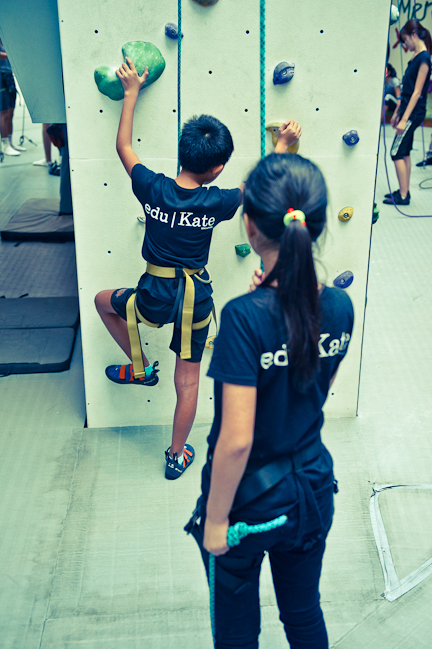
eduKate Tuition Centre Primary Students gets to enjoy our extra curricular holiday programmes. Our holistic approach extends to marrying PSLE syllabus curriculum to real life activities and team building social skills.P6 eduKate Students at Tampines Tuition Centre goes to Climb Central for eduKate Holistic ProgrammeeduKate PSLE Studetns getting Instruction on safety and equipment during social team building 2014 Holistic programme. Importance of staying safe and being responsible is learnt here.last check before we head out- eduKate Students gets final safety check by Climb Central Staff. Learning a new skill, new equipment and peripheral in a short amount of time is the lesson here. Focus and concentration skills of students are put to the test here. Getting this right equates to safety and survivability.equipment briefing and being taught about their equipment. eduKate PSLE tuition class goes for their enrichment class at climb central. They learn to be confident and never to give up till they reach the top. Plus know their own bodies and physical characteristics. Science combines with mental strength in a real world situation.Happy faces and definitely all rearing to climb some wall. All equipped and patient even though their hearts are jumping out just right now.the girls too…that’s a rather long way up, but its the journey of learning that makes it all worth while-perseverance and mental strength being testedbeing competitive and coming back strong is an important character trait. Primary students at Climb Central finds it tough to reach the top, but fights through the mental barrier and goes to the topI will never give up… Science, Mathematics, Strategies Mental Strength and Critical Thinking. Put all these items together and students starts to understand what they learn in eduKate, is actually useful when they are being challenged at Climb CentralI fell off a wall… and it was awesome! eduKate Student learns to fall and dust off the disappointment, persevere through the pain and get to the topI reached the top! eduKate Primary 6 students. We are proud of them when they achieve monumental feats. Positive reinforcement helps to empower our students. And fighting the mental barrier of height phobia.learning to trust, tutor Yuet Ling takes care of me… all the time. edukate PSLE student starts to get awesome.the first step is the hardest, but its all worth it. student’s learn how to trust each other, taking care of each other and being responsible in a critical safety situation. eduKate builds students characters, and we definitely aren’t your run-of-the-mill tuition centres.did you get a nice photo of me?? can you send it to my mom?? social skills, close ties with our parents and taking great care of our student’s development. eduKate wants to make the best and smartest Singaporeans, one student at a time.eduKate Students gets more training and honing their skills at climb central. Techniques, repeating a new skill until it becomes muscle memory and perfecting skill are being taught here.the best thing about today… is to know there’s a good friend for me that will stop me from falling. eduKate Students develops deeper ties and acquire important social skills. Team building skills and gaining a deep trust of each other to keep safe is essential for children.
eduKate Tuition Centre for PSLE Syllabus MOE SEAB English Science and Maths Tampines, Punggol and Marina Bay Primary and Secondary Schools
Office Hours:
PUNGGOL +65 8222 6327
TAMPINES +65 9247 8997
OFFICE +65 6638 8814
MARINA BAY +65 9181 1929
or email us at
admin@edukatesg.com
Our addresses for eduKate Tuition Centre:
Punggol 33, Punggol Field, Singapore 821211
Tampines 6 Tampines St 73, Singapore 528825
Marina Bay, 2 Marina Boulevard, Singapore 018987
eduKate Tuition Centre for PSLE Syllabus MOE SEAB English Science and Maths Tampines, Punggol and Marina Bay Primary and Secondary SchoolseduKate Tuition Centre for PSLE Syllabus MOE SEAB English Science and Maths Tampines, Punggol and Marina Bay Primary and Secondary SchoolseduKate Tuition Centre for PSLE Syllabus MOE SEAB English Science and Maths Tampines, Punggol and Marina Bay Primary and Secondary SchoolseduKate Tuition Centre for PSLE Syllabus MOE SEAB English Science and Maths Tampines, Punggol and Marina Bay Primary and Secondary Schools
Top 10 Idioms for PSLE English Syllabus, Singapore-eduKate Teaching Materials.
Idioms can add spice onto the canvas of your composition writing and when appropriately used, gives a dramatic effect and shows the mastery that you have attained. The idea here, while attempting PSLE, is to have a list of go-to tools that would cover almost every situation that you can come across. This helps pepper your composition, adding flavour and widen the spectrum of colour to your writing.
idiom-ˈɪdɪəm
-a group of words established by usage as having a meaning not deducible from those of the individual words (dictionary.com) Here’s 10 most useful idioms that you can use to almost every composition that you will see in PSLE.
A penny for your thoughts: asking someone’s thoughts
Best of both worlds: All advantages are in effect.
Can’t judge a book by its cover: Cannot judge something/someone on appearance alone.
Curiosity killed the cat: Being Inquisitive can lead you into an unpleasant situation.
Don’t put all your eggs in one basket: Do not put all your resources in one possibility.
Every cloud has a silver lining: Be optimistic, even difficult times will lead to better days.
In the heat of the moment: Overwhelmed by what is happening in the moment.
Kill two birds with one stone: To accomplish two different things at the same time.
Let the cat out of the bag: To share information that was previously concealed
Piece of cake: A job, task or other activity that is easy or simple.
Whether you are preparing for GCE, GCSE, IB, PSLE, SAT, or any examination, it is imperative to get your brains fit for the exams. Try these few websites for free brain teasers:
1) Brainmetrix.com contains general games that tests most of brain activities. IQ based, Cognitive and even Sudoku can be found free in here.
BrainMetrix.com screen capture
2) GamesForTheBrains.com is also a general brain teaser free games website that are simple for children to navigate. Just click on the links you find on the frontpage and you are all set to go.
3) BrainHQ.com is another website but it is slick and organised into memory, attention, brain speed, people skills, intelligence, and navigation exercises. However, it does need a sign up to get the basic tier games, and to access the full site there is a purchase involved.
Have your assessment books ready and arranged at arms length. Have all your equipment organized within a radius of 1.5 metres. Have water, food and whatever you need to be comfortable near you so that you don’t have to walk away to pick things up. Have a dedicated studystation that does not need packing and unpacking every time you study. It is yours and you do not need to put all your books away after you are done studying.
That way, the moment you sit down, you are all set to study. Walk away when you are tired, and when you are refreshed, come back and study. No packing. No unpacking. It is always there. The easier you settle down to do your studies, the less time and energy you waste walking around getting your studying organized. Because it is always there for you and organized as well in a small footprint of your house. You don’t have to grab things from all over the house when it is located only in one place.
2) PSLE is like any other examination.
Every time you go for examinations, treat it as if it is your PSLE. Primary 6 has 4 main exams before the PSLE. CA1, SA1, CA2, Prelimns. Treat all these exams like PSLE. Study hard, prepare for it, and keep evaluating where you can improve yourself. With experience, PSLE will be a breeze and you’ll get it done proper. Organize yourself into studying for English PSLE, Mother Tongue PSLE, Science PSLE and Mathematics PSLE and when the day comes, psyche yourself up and get those grades.
3) Improve your memory.
Without a good memory, it will always be the problem of learning something and forgetting it altogether. So why start to begin with? Spend time memorizing what you learn and do it the same day that the topic was taught to you. Also learn tricks to improve your memory.
Generally speaking, to memorize anything is basically a case of not forgetting. Hence, the more we spend time repeating something, the lesser the chance that we will forget something. Come back again and test yourself another day just to make sure you remember it and over time, it will be in your long term memory banks.
4) Speed is mind over matter.
Not completing a paper is the worse way one can lose marks. PSLE in Singapore generally runs within a week and the papers are completed in 1-2 hours. There are situations where students mismanage time and spends too much time on questions. To solve this problem, allocate time for your studies and set an alarm whenever you attempt a question.
General guidelines are: 1 mark for every minute.
So if you attempt a 5 mark question, you are only allowed 5 minutes to complete it. Past that, you will need to jump this question and start doing the next question. Come back and attempt it when you have completed the rest of the questions.
5) Ask and you shall receive.
This is by far the most important thing to do for PSLE preparation. Teachers, parents, friends and family will not know what you don’t know unless you ask. The more you communicate your needs, the more people can help. Tell them what problems you face. There is no problem so big it cannot be solved and no problems too silly that they will make fun of you. Everyone has to start learning from basics sometime before they become masters. And master you will.
“He who asks a question is a fool for five minutes; he who does not ask a question remains a fool forever.” – Chinese proverb
Punggol Female Tutors attending to Primary students when they find it difficult to understand
Punggol Tuition Centre for English Math and Science
Herein lies important dates for Singapore schools and our operating schedules for 2015. Parents take note that eduKate SG operates on all days except public holidays stated in SECTION 3.2
(all information are subject to changes from MOE and is only intended to be used as a rough guideline. dated 4th Nov 2014)
extract from MOE website:
School Terms and Holidays For 2015
1.0)The school year for 2015 for all MOE primary and secondary schools will start from Friday, 2 January and end on Friday, 20 November 2015. This takes into account 40 weeks of curriculum time for teaching and learning before the start of the national examinations, and six weeks of school vacation at end of year for teachers and students.
1.1) School Calendar 2015
PRIMARY & SECONDARY
Semester I
Term I
Fri 2 Jan – Fri 13 Mar
Term II
Mon 23 Mar to Fri 29 May
Semester II
Term III
Mon 29 Jun to Fri 4 Sep
Term IV
Mon 14 Sep to Fri 20 Nov
JUNIOR COLLEGE (JC) Year 1 & Millennia Institute (MI) Year 1
MI Year 2
JC Year 2 & MI Year 3
Semester I
Term I
Mon 2 Feb – Fri 13 Mar
Mon 5 Jan – Fri 13 Mar
Term II
Mon 23 Mar to Fri 29 May
Semester II
Term III
Mon 29 Jun to Fri 4 Sep
Term IV
Mon 14 Sep to Fri 20 Nov
Mon 14 Sep to end of ‘A’-level exams
1.2) School Vacation 2015
2.0)The four vacation periods for schools, junior colleges and centralised institute for 2015 will be as follows:
PRI & SEC
Between Terms I & II
Sat 14 Mar – Sun 22 Mar
Between Semesters I & II
Sat 30 May – Sun 28 Jun
Between Terms III & IV
Sat 5 Sep – Sun 13 Sep
At End of School Year
Sat 21 Nov – Thu 31 Dec
JC Year 1,
MI Year 1 & MI Year 2
JC Year 2 &
MI Year 3
Between Terms I & II
Sat 14 Mar – Sun 22 Mar
Between Semesters I & II
Sat 30 May – Sun 28 Jun
Between Terms III & IV
Sat 5 Sep – Sun 13 Sep
At End of School Year
Sat 21 Nov – Thu 31 Dec
End of ‘A’ Level exams – Thu 31 Dec
3.0) The scheduled school holidays and public holidays for 2015 will be as follows:
3.1) Scheduled School Holidays 2015
Youth Day
Sun 5 Jul (The following Monday, 6 Jul 2015 will be a scheduled school holiday)
Teachers’ Day
Fri 4 Sept
Children’s Day for primary schools and primary sections of full schools only)
Fri 9 Oct
3.2) Public Holidays 2015
Term I
New Year’s Day
Thu 1 Jan
Chinese New Year
Thu 19 Feb
Fri 20 Feb
Term II
Good Friday
Fri 3 Apr
Labour Day
Fri 1 May
Vesak Day
Mon 1 Jun
Term III
Hari Raya Puasa
Fri 17 Jul
National Day
*Sun 9 Aug
Term IV
Hari Raya Haji
Thu 24 Sep
Deepavali
**Tue 10 Nov
Christmas Day
Fri 25 Dec
*The next day, Mon 10 Aug 2015, will be a public holiday. **Tentatively, Deepavali will fall on 10 November in 2015. This date will need to be reconfirmed against the Hindu Almanac when it is available. Should there be a change in date, the Ministry of Manpower will issue a media release to announce the change accordingly.
Please be informed of the new format change in Primary School English, Singapore for 2015. This applies to PSLE English exam format and class practices, most noticeable in the Composition and Comprehension section. This change shall affect and include the PSLE syllabus for English, 2015 by Ministry of Education, MOE Singapore.
So parents buying the new assessment books or textbooks, kindly purchase only the latest revision or wait till the new books are out before purchasing. Currently, I still see the 2014 Assessment books being sold in the stores and it will be a waste buying that version to replace with the new ones later on.
Here is a summary of the changes, as informed by the MOE. A copy of the syllabus is included at the bottom of this page. (downloaded from SEAB website)
The Same:
English skill levels are the same as PSLE 2014. The syllabus remains as the STELLAR programme introduced by MOE in 2013 for Primary 4 students. This is the chronological order of revisions to MOE’s EL Syllabus.
2001-New EL Syllabus introduced.
2006-EL Syllabus review by EL Curriculum and Pedagogy Review Committee
2010-incorporation of changes recommended by 2006 Review Committee to previous 2001 EL Syllabus
2013-STELLAR Programme starts for Primary 4
2015-revision of STELLAR programme only to format of PSLE English Language (EL) and Foundation English Language (FEL)
The Changes:
New Assessment books for PSLE ENGLISH SEAB Syllabus 2015
2015 changes to PSLE EL and FEL Papers are as follows:
Continuous Writing: Changes from optioning 2 fixed scenario question to 1 visual stimulated question. Freedom to write using narrative, exposition, descriptive or any appropriate methods taught in school. Approach to story writing from different perspectives, leading to multiple plots for different candidates. Creative writing and freedom in thought seems to be embraced in this revision.
Comprehension: New format with tables and different ways to answer questions, requiring students to be able to adapt answering skills to changing situations.
Listening Comprehension: Higher amounts of visual stimulation so that candidates will require a higher mastery of their cognitive skills to answer questions properly.
Oral Communication: Picture Discussion and Conversation will be replaced to Stimulus based Conversation. It shall be themed to the reading aloud piece and shall require students to give their own views on the topic. This is in line with the MOE to require students to be more social and interactive, improving their social skills for the 21st Century.
P6 eduKate Students at Tampines Tuition CentreeduKate Tuition Class SEAB PSLE Syllabus Primary 6 English Tuition at TampineseduKateSG Primary Students at Punggol Tuition Centre Prive Condominium doing PSLE SEAB Syllabus English Primary 4 and 5
Here is a copy of the PSLE English Syllabus by MOE:
PSLE ENGLISH LANGUAGE SYLLABUS 2015
Implemented from the Year of Examination 2015
PURPOSE OF EXAMINATION
The purpose of the examination is to assess the candidates’ attainment in English Language based on the Learning Outcomes stated in the English Language Syllabus 2010: Primary & Secondary (Express / Normal [Academic]). The Learning Outcomes form the basis for the assessment objectives listed on page 3.
ASSESSMENT OBJECTIVES In this English Language examination, candidates will be assessed on their ability to:
In Paper 1 (Writing)
AO1 write to suit purpose, audience and context in a way that is clear and effective
AO2 use appropriate register and tone in a variety of texts
AO3 generate and select relevant ideas, organising and expressing them in a coherentand cohesive manner
AO4 use correct grammar, spelling and punctuation
AO5 use a variety of vocabulary appropriately, with clarity and precision
In Paper 2 (Language Use and Comprehension)
AO1 demonstrate comprehension of a range of texts at the literal and inferential levels
AO2 show understanding of implied meaning, and make judgement and evaluation, byreading and/or viewing closely and critically
AO3 show understanding of how contextual use of lexical and grammatical itemsshapes meaning
AO4 demonstrate the correct use of grammar, spelling and punctuation, and theappropriate use of vocabulary in given contexts
In Paper 3 (Listening Comprehension)
AO1 demonstrate understanding of the content of a variety of spoken texts at the literal and inferential levels
AO2 identify key messages, main ideas and details in a variety of spoken texts
AO3 infer and draw conclusions by listening critically
In Paper 4 (Oral Communication)
AO1 read with good pronunciation, clear articulation and appropriate intonation in order to convey the information, ideas and feelings in a passage
AO2 produce a well-paced, fluent reading of a passage
AO3 express their personal opinions, ideas and experiences clearly and effectively inconversing with the examiner
AO4 speak fluently and with grammatical accuracy, using a range of appropriatevocabulary and structures
EXAMINATION FORMAT Candidates will be assessed in the following areas:
PAPER
COMPONENT
ITEM TYPE
NO. OF ITEMS
MARKS
WEIGHTING
DURATION
1 (Writing)
Situational Writing Continuous Writing
OE OE
1 1
15 40
27.5%
1 h 10 min
2 (Language Use and Comprehension)
Booklet A: Grammar Vocabulary Vocabulary Cloze Visual Text Comprehension Booklet B: Grammar Cloze Editing for Spelling and Grammar Comprehension Cloze Synthesis / Transformation Comprehension OE
MCQ MCQ MCQ MCQ OE OE OE OE OE
10 5 5 8 10 12 15 5 10
10 5 5 8 10 12 15 10 20
47.5%
1 h 50 min
3 (Listening Comprehension)
Listening Comprehension
MCQ
20
20
10%
About 35 min
4 (Oral Communication)
Reading Aloud Stimulus-based Conversation
OE OE
1 passage 1 visual stimulus
10 20
15%
About 10 min (5 min preparation time; about 5 min examination time)
Part 1 (Situational Writing): Candidates will be required to write a short functional piece (e.g. letter, email, report) to suit the purpose, audience and context of a given situation.
Part 2 (Continuous Writing): Candidates will be required to write a composition of at least 150 words in continuous prose on a given topic. Three pictures will be provided on the topic offering different angles of interpretation. Candidates may also come up with their own interpretation of the topic.
Paper 2 (Language Use and Comprehension)
Candidates will be assessed on their ability to use language correctly and to comprehend visual and textual information.
Paper 3 (Listening Comprehension)
This paper comprises 20 multiple-choice questions which test candidates’ ability to understand spoken English. The texts may be in the form of news items, announcements, advertisements, instructions, explanations, conversations, speeches and stories. Graphic representations will be used for the first seven items. Each text will be read twice. Time will be given for candidates to read the questions before the first reading of each text.
Paper 4 (Oral Communication)
For Reading Aloud, candidates are assessed on their ability to pronounce and articulate words clearly, as well as their ability to read fluently with appropriate expression and rhythm.
For Stimulus-based Conversation, candidates are assessed on their ability to give a personal response to a visual stimulus and engage in a conversation on a relevant topic.
Press Releases (from moe.gov.sg)
September 3, 2012
Learning of English to Develop 21st Century Competencies
STELLAR English for Upper Primary to Start from Primary 4 Next Year
1) Upper primary students can look forward to more interactive English lessons with the implementation of the revised 2010 English Language (EL) Syllabus at Primary Four from 2013. The new syllabus incorporates a sharper focus on 21st century competencies to enable our students to communicate effectively and confidently in the globalised world. Students who are taught the new syllabus will sit for the revised Primary School Leaving Examination (PSLE) EL papers in 2015.
2) The Ministry of Education (MOE) reviews the EL Syllabus regularly to ensure that it is relevant to the changing environment and profile of our learners. The 2010 EL Syllabus builds on the strengths of the 2001 syllabus, and aims to equip our students with the language skills they need for day-to-day communication and for the next stage of learning. It emphasises building a strong foundation in the language and enriching language learning for all as recommended by the EL Curriculum and Pedagogy Review Committee in 2006.
3) The key feature of the new EL Syllabus is a systematic approach to teaching language skills, using rich texts and a variety of language resources to enable students to appreciate the language beyond the classroom. This approach is delivered through the Strategies for English Language Learning and Reading (STELLAR) programme in primary schools.
4) The STELLAR programme, developed by MOE, provides the instructional materials, teaching strategies and training to enable teachers to implement the EL syllabus effectively. The STELLAR programme is designed to cater to a diverse range of EL learners in our school system and was developed based on research carried out in Singapore schools. As part of the programme, EL is taught through stories and texts that appeal to children, with explicit grammar instruction. Students are provided with opportunities to express themselves in an environment where language learning can be enjoyable yet purposeful. Through the reading of engaging stories in class, students get to speak extensively, discussing and sharing their views with the teacher and their peers. The main purpose is to build students’ confidence in speech and writing, and enhance their learning of the language. Please refer to Annex A for an overview of the 2010 EL Syllabus. More information on the STELLAR programme can be found at the STELLAR website.
Assessment
5) The revised PSLE English Language (EL) and Foundation English Language (FEL) examination papers will be introduced from 2015, in line with the changes to the teaching syllabus. The language skills tested in the revised PSLE are the same as those tested in the current PSLE. However, the revised examination papers give greater emphasis to the 21st century competencies in the teaching syllabus by:
Giving students greater scope for providing personal response in speaking and writing
Greater emphasis on viewing skills integrated with listening and reading
6) The changes to the examination papers are outlined in Annex B.
Annex B
Revised PSLE English Language (EL) and Foundation English (FEL) Examinations
The revised English Language (EL) examination comprises four papers. The main revisions are as follows:
For the Continuous Writing component of Paper 1, instead of two questions with fixed scenarios for candidates to choose from to write a narrative, one topic is offered which can be approached from any one of several perspectives. To help candidates think about the different perspectives of the topic, visuals will be provided. In addition, candidates will be free to write a narrative or exposition or any appropriate text type learned in schools.
There will be a new Visual Text Comprehension section in Paper2 in the form of multiple choice questions (MCQs). One such example would be questions based on a poster.
For the Comprehension Open-ended section in Paper 2, the types of questions will now be varied and could include, for example, tables which candidates will fill in using information from the passage.
The Listening Comprehension paper will have more items with graphic representation compared to the existing paper.
For the Oral Communication paper, the existing Picture Discussion and Conversation components will be replaced by the Stimulus-based Conversation component. Candidates will give their personal response to a visual stimulus that is thematically linked to the Reading Aloud passage. Candidates will then move on seamlessly to a discussion on a relevant topic.
The revised Foundation English Language (FEL) examination comprises four papers. The main revisions are as follows:
For the Continuous Writing component in Paper 1, the visual stimulus, which is a series of three framed pictures in the current paper, will include an additional fourth frame featuring a question mark in the revised paper with the provision of helping words for each of the first three pictures. The picture-in- series format is to help candidates sequence their story while the question mark in the last frame is to give students the opportunity and flexibility to give their own endings to their stories.
For the Comprehension Open-ended section in Paper 2, the types of questions will be varied (e.g., graphic organisers, multiple-choice questions and sequencing-type questions might be used). Pictures may be featured together with the comprehension passages.
The FEL Listening Comprehension paper will also feature more items with graphic representation compared to the existing paper. There will be a new listening task in which candidates listen for main ideas and select the appropriate response from the three options for each MCQ.
For the Oral Communication paper, the FEL paper will also feature a Stimulus-based Conversation component in place of the existing Picture Discussion and Conversation components.
The revisions are summarized below:
English Language
Foundation English Language
Giving students greater scope for providing personal response in speaking and writing
Paper 1(Continuous Writing): Greater scope for writing from different perspectives, and flexibility for candidates to choose any text type such as narrative or exposition.
Paper 4 (Oral Communication): New Stimulus-based Conversation component will feature a context familiar to students that will provide a springboard for conversation.
Paper 1(Continuous Writing): The picture series ends with a frame with a question mark to allow candidates the flexibility to give their own endings to their compositions.
Paper 4 (Oral Communication): New Stimulus-based Conversation component will feature a context familiar to students that will provide a springboard for conversation.
Greater emphasis on viewing skills integrated with listening and reading
Paper 2 (Language Use and Comprehension): New Visual Text Comprehension section that features a multi-modal print text which will include visuals such as pictures, diagrams, charts, graphs and tables together with the written texts.
Paper 3 (Listening Comprehension): Increase in the number of questions with graphic representation.
Paper 2 (Language Use and Comprehension): Pictures may be featured together with the Comprehension passages, where appropriate, to help students comprehend the texts.
Paper 3 (Listening Comprehension): Increase in the number of questions with graphic representation.
Disclaimer: the above is downloaded from seab.gov.sg moe.gov.sg and is correct as of 15th April 2015. (last update from edukatesg.com) Any revisions from this date on shall be updated by edukatesg.com and updated with notes. This page is intended for use by edukate Singapore Tuition Centre students and parents for their reference and examination planning schedule. Kindly disregard if otherwise.
Thank you.
For an experience of our dynamic classes and how we can empower your child,
Ms Teo Yuet Ling +65 8222 6327
admin@edukatesg.com
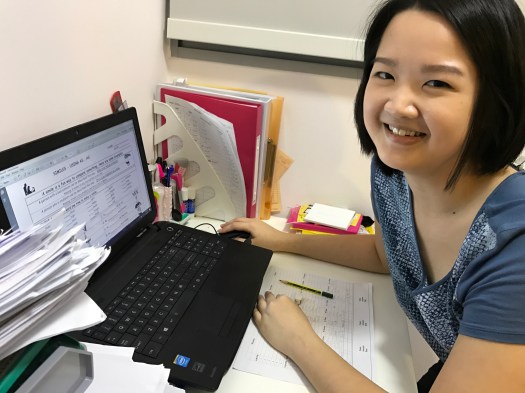
Punggol Tuition Centre for English Math and ScienceFemale Punggol tutor Yuet Ling preparing materials for English, Maths and Science tuition. We provide up-to-date, innovative and fun materials that challenge our students intellectually.PSLE English Singapore Tuition. MOE Syllabus. Female TutorTutor Yuet Ling in Melbourne, Australia. Primary English PSLE Tuition Programme.
Modernise your writing with new phrases or idioms.
Time shifts language and adopts new words/phrases. As we continue into the 21st Century, usage of idioms have changed significantly in our society and time dictates certain idioms/phrases to be out of date and some that becomes fashionable.
Here’s a few fun ones:
take things easy
suck it up
keep in touch
speak of the devil
slip past
send me up the wall
you got me
hit it off
mixed up in
in summary
These phrases are definitely useful and fashionable right now, and gives a contemporary and modern feel to your writing. If your composition is written in a modern setting, keep the words trendy and fresh.
Or it depends on the characters that you use in your composition. When the person is older, he/she can take on an older vocabulary/phrase/idiom. But when the character is younger, then keep it trendy, like “Whoa! Nellie”.
So keep that in mind when you write your next composition. Certain phrases might sound archaic and eventhough it is contextually correct, it just gives a slightly musty feel to your writing, dusty covers and all.
English Tuition with Yuet Ling doing Cloze Passages.
Punggol Tuition Centre for English Math and Science
Often have I heard parents complain about their child’s lack of reading story books. In Singapore, this is made worse with electronics like games and smartphones becoming a staple in everyday activities of our children. Texting and all that distraction becomes the scourge of the millennium to some parents. Made worse with social media and the need for kids to fit in with their peers.
So how do we change the tides and make the kids read?
reading as enjoyment
First and foremost, reading has to be enjoyable to our children. It has to be fun, and definitely a million miles away from being a chore. That is the key to starting them on the right path. So let’s see what we can do to make this fun.
information information information
Children are naturally inquisitive. They crave information of the world they are in. They are natural learners and if you can light the spark of curiosity, they will carry that spark and more often then not, you will not need to do anymore from then on. One way I create curiosity in my students are to tell them stories. Stories of great people like Julius Caeser and how he is forever remembered in our month July named after him. Stories of how our forefathers struggles lead us to where we are today. Make sure its fun, and something amazing and once you catch their attention, they will want to know more, after which, I print out relevant articles of that story, and they will start reading. With much curiosity.
The idea is to seed their imagination, and slowly they will latch on and take it upon themselves to find out more. And that’s where we welcome in the 21st Century. The internet is a fabulous playground for the child. Google their curiosity away and make technology you were lamenting turn to your favour.
Bear in mind, some stories works wonders to certain groups of students, some not so much. Which leads us to the next point.
customise your reading
Recognise that one man’s meat is another man’s poison. There is an art in tailoring materials that suits your child. More often than not, you probably know what your child likes. Every kid is unique, and what might work for one, will probably not work for another. Recognize that if you like Lord of the Rings, might not be what your child will naturally take after. Harry Potter perhaps, or even the great Classics.
Make sure they find it new and relevant, and something they don’t find old fashioned. Nothing stops them dead on their tracks faster than information that is irrelevant and old. Its like owning an old beat up car that you won’t want to show off to your friends. Information that is old makes kids feel like they are learning something that everyone else knows, pretty much like an old beat up car.
the story doesn’t stop there
Support your child’s interests by researching not just the topic itself, but everything else that surrounds the topic.
Transformers the movie comes along and you can start talking about Transformers. Wikipedia has articles about Transformers. Why? How? What? Who? Talk about Peter Cullen and how he got to voice Optimus Prime. Talk about your own experiences about Transformers in your childhood.
The innards and the stories surrounding a story makes it more interesting for your child. Its like a secret that no one else knows. Sssshhhh….. let me tell you something special… and they get all tingly because it makes them special.
be the pillar of knowledge
This is probably a good way to make a child read. Children usually learn more when they find a role model to emulate. Tell them things that we know. Our own stories, knowledge, and pass it on to them. When we tell them so much information, they will want to be exactly like us. And when they find out that we got our knowledge from reading, they will definitely want to do the same too. Birds of a feather, flocks together.
library vs bookshops
Again, technology is starting to be wide spread in this arena. Libraries are finding ways to keep up with the times and don’t forget Amazon’s kindle which is an electronic book. We can easily buy a book off the internet, or even download one of the many free ebooks that are available. iPads are starting to get into the act too with lots of free downloads. The thing is, do what your child likes. Bring your kids to the library, see if they like reading by borrowing books, or try to get down to a bookshop and let them have their fun browsing. Also, go to different libraries as some are swankier than the others. Like us, kids likes new places. And look good too doing it.
So there you go, it takes a bit of effort to start your child on the track. But once you unlock their potential, they will fuel their own passions. All we need is just to kickstart them onto the right path.
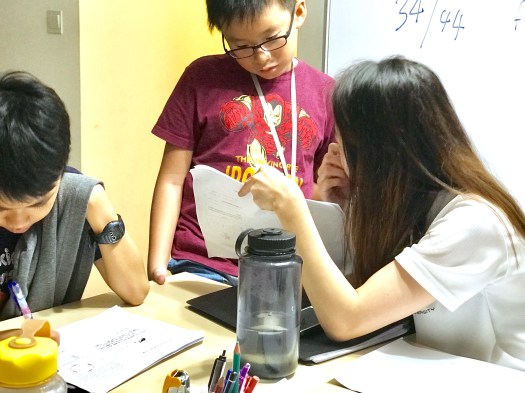
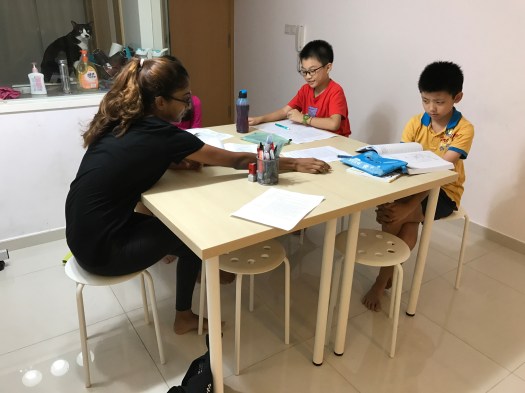
Making sure PSLE students knows how to do the full working for Paper 2 long questions.Primary Math Tuition for PSLEPunggol Small Group Tuition with female Punggol Tutor makes sure all students asks when they do not understandPunggol Tutor at eduKate SG Experience Best Female Tutors in Punggol for Small Group Tuition Primary 1,2,3,4,5,6 PSLE SEAB














 Singapore Mathematics Tuition Centre