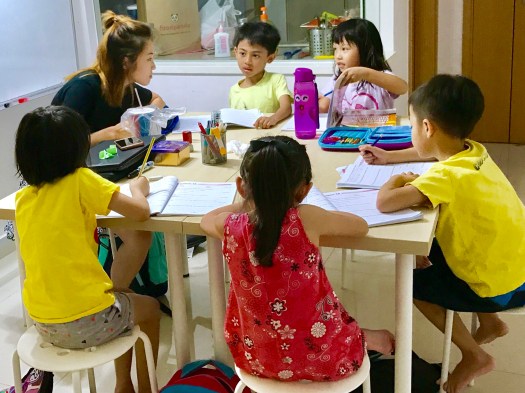
Classes for 2015

Herein lies the class contents and SEAB MOE Syllabus of our 2015 tutorial classes for English, Maths and Science tuition at both eduKate Tampines and Punggol Branch. MOE PSLE syllabus will be adhered to strictly with additions as listed below applied for your child’s character development and skill improvements. PSLE Syllabus by SEAB MOE can be found at bottom of this page.

Primary English

eduKate’s syllabus covers MOE guideline PSLE Syllabus English 2015 as our core lesson content.

  • Vocabulary
  • Grammar
  • Synthesis
  • Composition (Situational and Continuous)
  • Comprehension
  • Cloze Passage
  • Listening Comprehension
  • Oral and speech

In addition, we incorporate the following into our English programme:

  • Creative writing
  • Historical Knowledge
  • General Knowledge
  • Moral Ethics and Good Manners
  • Introduction to Newspapers and Current Affairs
  • Reading & Appreciation of Classical Children Story Books
  • English and its use in Technology and Social Media

Primary Mathematics

eduKate’s syllabus for Mathematics follows MOE guideline in accordance to cohort requirements from Primary 1-6.

In addition, we shall incorporate the following into our Mathematics programme:

  • Conceptual Understanding and Skill Proficiency
  • Heuristics and application to Problem Sums
  • Every day use of Mathematics
  • PSLE Preparatory Mathematics Classes in October 2014
  • PSLE Intensive Mathematics Classes in June-October 2015
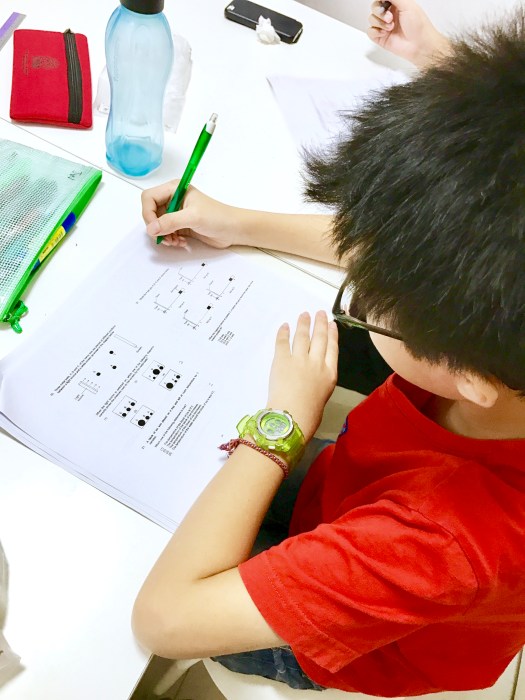
eduKate Singapore Tampines Tuition Centre Student doing Secondary Math

Below are a list of schools that we currently cater to in accordance to our current location

Tampines Tuition Branch:

  • Angsana Primary School
  • Chongzheng Primary School
  • East Spring Primary School
  • East View Primary School
  • Gongshang Primary School
  • Junyuan Primary School
  • Poi Ching School
  • St. Hilda’s Primary School
  • Tampines North Primary School
  • Tampines Primary School
  • Yumin Primary School
  • Dunman Secondary School
  • East Spring Secondary School
  • East View Secondary School
  • Junyuan Secondary School
  • Ngee Ann Secondary School
  • Pasir Ris Secondary School
  • Springfield Secondary School
  • St. Hilda’s Secondary School
  • Tampines Secondary School
  • Tampines Junior College
  • United World College of South East Asia (Tampines Campus)
  • Canossa Convent Primary School
  • East Coast Primary School
  • Eunos Primary School
  • Geylang Methodist School (Primary)
  • Haig Girls’ School
  • Macpherson Primary School
  • Maha Bodhi School
  • Maris Stella High School
  • Ngee Ann Primary School
  • St. Gabriel’s Primary School
  • Tao Nan School
  • Yangzheng Primary School
  • Bartley Secondary School
  • CHIJ Katong Convent
  • Geylang Methodist School (Secondary)
  • MacPherson Secondary School
  • Manjusri Secondary School
  • Ping Yi Secondary School
  • St. Gabriel’s Secondary School
  • Zhonghua Secondary School
  • Nanyang Junior College

Punggol Tuition Branch:

  • Casuarina Primary School
  • Compassvale Primary School
  • Coral Primary School
  • Edgefield Primary School
  • Elias Park Primary School
  • Greendale Primary School
  • Horizon Primary School
  • Loyang Primary School
  • Mee Toh School
  • Meridian Primary School
  • North Vista Primary School
  • Palm View Primary School
  • Park View Primary School
  • Pasir Ris Primary School
  • Punggol Primary School
  • Punggol Green Primary School
  • Punggol View Primary School
  • Seng Kang Primary School
  • White Sands Primary School
  • Yio Chu Kang Primary School
  • Compassvale Secondary School
  • Coral Secondary School
  • Edgefield Secondary School
  • Greendale Secondary School
  • Greenview Secondary School
  • Hai Sing Catholic School
  • Loyang Secondary School
  • North Vista Secondary School
  • Pasir Ris Crest Secondary School
  • Punggol Secondary School
  • Seng Kang Secondary School
  • Siglap Secondary School
  • Meridian Junior College
  • North Spring Primary School
  • Rivervale Primary School
  • CHIJ St. Joseph’s Convent
  • Anchor Green Primary School
  • Fernvale Primary School
  • Nan Chiau Primary School
  • Sengkang Green Primary School
  • Springdale Primary School
  • Nan Chiau High School
  • Pei Hwa Secondary School
Secondary Mathematics GCE O levels at eduKate SG Tuition Centre

Current PSLE Syllabus outlined by SEAB MOE website Jan 2015 onwards

PSLE ENGLISH LANGUAGE

Implemented from the Year of Examination 2015

PURPOSE OF EXAMINATION

The purpose of the examination is to assess the candidates’ attainment in English Language based on the Learning Outcomes stated in the English Language Syllabus 2010: Primary & Secondary (Express / Normal [Academic]). The Learning Outcomes form the basis for the assessment objectives listed on page 3.

ASSESSMENT OBJECTIVES

In this English Language examination, candidates will be assessed on their ability to:

In Paper 1 (Writing)

  1. AO1  write to suit purpose, audience and context in a way that is clear and effective
  2. AO2  use appropriate register and tone in a variety of texts
  3. AO3  generate and select relevant ideas, organising and expressing them in a coherentand cohesive manner
  4. AO4  use correct grammar, spelling and punctuation
  5. AO5  use a variety of vocabulary appropriately, with clarity and precision

In Paper 2 (Language Use and Comprehension)

  1. AO1  demonstrate comprehension of a range of texts at the literal and inferential levels
  2. AO2  show understanding of implied meaning, and make judgement and evaluation, byreading and/or viewing closely and critically
  3. AO3  show understanding of how contextual use of lexical and grammatical itemsshapes meaning
  4. AO4  demonstrate the correct use of grammar, spelling and punctuation, and theappropriate use of vocabulary in given contexts

In Paper 3 (Listening Comprehension)

  1. AO1  demonstrate understanding of the content of a variety of spoken texts at the literal and inferential levels
  2. AO2  identify key messages, main ideas and details in a variety of spoken texts
  3. AO3  infer and draw conclusions by listening critically

In Paper 4 (Oral Communication)

  1. AO1  read with good pronunciation, clear articulation and appropriate intonation in order to convey the information, ideas and feelings in a passage
  2. AO2  produce a well-paced, fluent reading of a passage
  3. AO3  express their personal opinions, ideas and experiences clearly and effectively inconversing with the examiner
  4. AO4  speak fluently and with grammatical accuracy, using a range of appropriatevocabulary and structures

EXAMINATION FORMAT

Candidates will be assessed in the following areas:

PAPER

COMPONENT

ITEM TYPE

NO. OF ITEMS

MARKS

WEIGHTING

DURATION

1 (Writing)

Situational Writing Continuous Writing

OE OE

1 1

15 40

27.5%

1 h 10 min

2

(Language Use and Comprehension)

Booklet A:

Grammar

Vocabulary

Vocabulary Cloze

Visual Text Comprehension

Booklet B:

Grammar Cloze

Editing for Spelling and Grammar

Comprehension Cloze

Synthesis / Transformation

Comprehension OE

MCQ MCQ MCQ MCQ

OE OE

OE OE OE

10 5 5 8

10 12

15 5 10

10 5 5 8

10 12

15 10 20

47.5%

1 h 50 min

3

(Listening Comprehension)

Listening Comprehension

MCQ

20

20

10%

About 35 min

4

(Oral Communication)

Reading Aloud

Stimulus-based Conversation

OE OE

1 passage

1 visual stimulus

10 20

15%

About 10 min (5 min preparation time; about 5 min examination time)

Total

200

100%

Legend:

MCQ Multiple-choice questions OE Open-ended questions

Paper 1 (Writing)

Part 1 (Situational Writing): Candidates will be required to write a short functional piece (e.g. letter, email, report) to suit the purpose, audience and context of a given situation.

Part 2 (Continuous Writing): Candidates will be required to write a composition of at least 150 words in continuous prose on a given topic. Three pictures will be provided on the topic offering different angles of interpretation. Candidates may also come up with their own interpretation of the topic.

Paper 2 (Language Use and Comprehension)

Candidates will be assessed on their ability to use language correctly and to comprehend visual and textual information.

Paper 3 (Listening Comprehension)

This paper comprises 20 multiple-choice questions which test candidates’ ability to understand spoken English. The texts may be in the form of news items, announcements, advertisements, instructions, explanations, conversations, speeches and stories. Graphic representations will be used for the first seven items. Each text will be read twice. Time will be given for candidates to read the questions before the first reading of each text.

Paper 4 (Oral Communication)

For Reading Aloud, candidates are assessed on their ability to pronounce and articulate words clearly, as well as their ability to read fluently with appropriate expression and rhythm. For Stimulus-based Conversation, candidates are assessed on their ability to give a personal response to a visual stimulus and engage in a conversation on a relevant topic.

PSLE MATHEMATICS

For Examination from 2009

PURPOSE OF THE EXAMINATION

The purpose of the Mathematics examination is to assess pupils’ attainment in mathematics at the end of primary education with respect to the objectives of the 2007 Mathematics (Primary) syllabus. pdf file-PSLE-maths-primary-2007

ASSESSMENT OBJECTIVES

Pupils should be able to:

  •   recall specific mathematical facts, concepts, rules and formulae, and performstraightforward computations. (Knowledge)
  •   interpret data and use mathematical concepts, rules and formulae, and solveroutine or familiar mathematical problems. (Comprehension)
  •   analyse data and/or apply mathematical concepts, rules and formulae in acomplex situation, and solve unfamiliar problems. (Application & Analysis)EXAMINATION FORMATThe examination consists of two written papers comprising three booklets.

Paper

Booklet

Item Type

Number of questions

Number of marks per question

Weighting

Duration

1

A

Multiple-choice

10

1

10%

50 min

5

2

10%

B

Short-answer

10

1

10%

5

2

10%

2

Short-answer

5

2

10%

1 h 40 min

Structured / Long-answer

13

3, 4, 5

50%

Total

48

100%

2 h 30 min

Notes

  1. Both papers will be scheduled on the same day with a break between the two papers.
  2. Paper 1 comprises two booklets. The use of calculators is not allowed.
  3. Paper 2 comprises one booklet. The use of calculators is allowed.

Item Types

Multiple-choice Question

For each question, four options are provided of which only one is the correct answer. A candidate has to choose one of the options as his correct answer.

Short-answer Question

For each question, a candidate has to write his answer in the space provided. Any unit required in an answer is provided and a candidate has to give his answer in that unit.

Structured / Long-answer Question

For each question, a candidate has to show his method of solution (working steps) clearly and write his answer(s) in the space(s) provided.

PSLE SCIENCE

For examination from 2010

PURPOSE OF THE EXAMINATION

The PSLE Science Paper assesses pupils’ attainment in Science with respect to the aims of Primary Science Education as stated in the 2008 Science (Primary) syllabus pdf file- psle-science-primary-2008.

ASSESSMENT OBJECTIVES

The assessment objectives are as follows:

  1. Knowledge with UnderstandingPupils should be able to demonstrate knowledge and understanding of scientific facts, concepts and principles.
  2. Application of Knowledge and Process SkillsPupils should be able to:
    1. apply scientific facts, concepts and principles to new situations.
    2. use one or a combination of the following basic process skills:
      •   Observing
      •   Comparing
      •   Classifying
      •   Using apparatus and equipment
      •   Communicating
      •   Inferring
      •   Predicting
      •   Analysing
      •   Generating possibilities
      •   Evaluating
      •   Formulating hypothesis

EXAMINATION FORMAT Format of Paper

The examination consists of one written paper comprising two booklets, Booklet A and Booklet B.

Table 1

Booklet

Item Type

Number of questions

Number of marks per question

Weighting (%)

A

Multiple-choice

30

2

60

B

Open-ended

14

2,3,4

40

  1. I  Booklet A consists of 30 multiple-choice questions. Each multiple-choice question carries 2 marks.
  2. II  Booklet B consists of 14 open-ended questions. Each open-ended question carries 2, 3 or 4 marks.

Duration of Paper

The duration of the paper is 1 hour 45 minutes.

the above is downloaded from seab.com.sg  and is correct as of 3rd April 2015. Any revisions from this date on shall be updated by educatesg.com and updated with notes. This page is intended for use by edukate Singapore Tuition Centre students and parents for their reference and examination planning schedule. Kindly disregard if otherwise. Thank you.
Punggol Tuition Centre Small Group English Math Science Tutor
Yuet Ling in Melbourne CBD touring the City, Australia.
Punggol English Math Science Tutor Tuition Centre Primary Secondary Pri Sec 1 2 3 4 5 6
Tutor Yuet Ling LV Takashimaya. SGP.
Punggol Tutor Singapore Tuition Centre Primary Secondary Pri Sec 123456 PSLE O level GCE SEAB MOE Syllabus Tutor
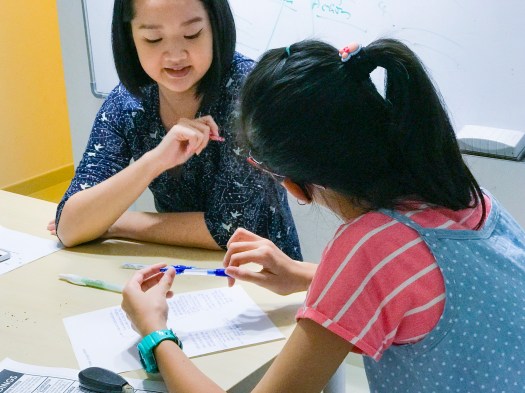
Tutor Yuet Ling teaching a PSLE Creative Writing class. It is all about the students’ progress. Give it a go, organise their thoughts and arm them with the best knowledge.
Punggol English Math Science Tuition Small Group Tutor
Tutor Yuet Ling at LV MBS
Punggol Tutor English Math Science Small Group MOE Syllabus Tuition
Tutor Yuet Ling Stalactites Restaurant Melbourne CBD Australia
Punggol Tutor English Mathematics Science Tuition Centre Small group MOE SEAB Syllabus
One of our residents Pebbles.

A Crash Course in Surviving PSLE

Its the time of the year, 2 months to go for PSLE or GCE O’ Levels and the panic buttons are being pushed. Here’s a crash course and survival guide:

Make space

Clear out the junk on your table and make your room conducive for studying. This shall be your goto place for study and make sure it is bright and peaceful. A clear table stops any distraction  as well. No TV, games, computers, handphones. Just you and your work.

The 5 P’s

Proper Planning Prevents Poor Performance. Write out all the topics that needs to be revised. Calculate how much time that needs. Add in hours to be spent on revision papers and past year exam papers . Divide that by how many weeks more to exams and that is how much time you need to study a day, at the very least. Which leads us to the need for a time table.

Have a timetable

Set up a time table and schedule every minute. Time management is important in making sure all the topics are covered.  Do put in little breathers as all work as no play makes Jack/Jane a dull person.

Start with revising topics

Revise topics from the easiest to the hardest. This helps in covering lots of easy topics fast and as confidence grows, work up to the harder stuff.

Get Help

Have a really solid tutor that you can count on. (Contact Us)  Generally someone who knows enough of your syllabus that you can get help fast and download as much information to you in the shortest time possible. There will be times when you are revising and there’s some questions where you will hit the wall. Mark those down and ask. This will boost your confidence.

Tutors checking primary science papers from school examinations

Get those past year papers

Once done with revision, time to hit those past year exam papers. If you have a hard time looking for it, send us an email and we can help you out in obtaining them.

eduKate with Minister of Education, Mr Heng Swee Kiat

Sleep your 9 hours worth 

Research has proven that peak performance occurs for individuals that clocks in 9 hours of sleep consistently. Your brain will thank you for it.

 Study hard now, slow down when it gets nearer to exams

That’s stress management. Plan to cover more at the beginning and slower in the end. As the exam nears, we need to spend lesser on studying and more time organising our memory palace. Making sure everything is at your fingertips when you need it and cooling down to make sure your brains can handle the stress when the exam starts.

The calm before the storm

It is best to spend time prepping for the big day. Both mentally and physically. Run through how you will do your papers in your mind. Eat healthy food, on time and drink lots of water. Staying healthy is key to peak performance. Exercise too but not anything that will break bones and end in a trip to hospital. Staying sharp and well rested will keep any sickness at bay.

eduKate is committed to community development. 2014

Stay happy and optimistic

Its also important to stay happy. So whenever you feel things turning dark, slow down and take a breather. Go hang out with friends and family. Do remember its just an exams and its never the end of the world. If you planned it right and did your best, chances are, you’ll be doing alright.

Student gets good grades with the proper help and good attitude towards his studies.

Synching your body to the exam time tables 

Your body is a creature of habit. Wake up and sleep at the same time every day. This includes the weekends. Study at the same time as the exam time table. Sit down for the whole duration of an exam, approximately 2 hours, and do not make any toilet trips during that time. Eat at the same time too as you do not want to get hungry or thirsty during exams. Get your body accustomed to handle the stresses of an exam. Don’t change this until the exams are over. This will lessen distractions and help you in concentrating fully on the exams.

Equipment checklist

Have a checklist of what you need for the exams. Different papers requires different equipment so make sure to bring it along with respect to the paper at hand. Don’t forget your identification papers too. Buy spares and have all your equipment checked for proper working conditions. I always advise students to have duplicates of all their stationery. Better to have more than less or risk repeating another year to retake the exams.  Generally speaking, pens are never enough in an exams, and two calculators just in case one gives up mid way

Bring the right equipment and have backup calculators just in case. Murphy's Law at work.
Bring the right equipment and have backup calculators just in case. Murphy’s Law at work.

The Storm 

Listen to everything the examiner says and only start when they say so. Don’t worry about what happens around you and just worry about your own paper. That’s your own paper and that is the most important task to you right there and then. Do it at a good pace and never worry if someone else are done earlier than you. Once you have completed, make sure that all pages are attempted, your name/identification number is on the paper, and check your work until time is up. You are given a set time for the paper and not a single second should be wasted so make sure you squeeze every mark out of that paper.

Home Sweet Home

Once the paper is done, get back home and do not discuss the exam questions with your friends. That’s just counter productive and could demoralise you if you find out that there is things that you got wrong. Crying over spilt milk won’t help you or get you a better grade once the paper is handed in. Besides, you will never see that paper again in your life so forget and look forward to the next exam. You are better off wisely spending that time winding down, resetting and start preparing for the next paper.

Keeping yourself optimistic, healthy and happy is a key to achieving a great result.

eduKate is committed to community development. 2014
edukate Punggol Tuition English Math Science Creative Writing
Punggol Tuition Centre for English Math and Science
punggol tuition english math science tutor primary secondary
Science students are taught to think like a scientist in our Science tuition. To be a scientist and then think logically to get through the questions that are presented in their Examinations.

Optimism and its role in studying

There is a direct correlation between the optimism in a student and the success in studying. Just like the answer to the glass is half full or half empty, this concept is very much a question about the outlook and confidence of the individual. The optimism of students to how well they fare in their studies cannot be quantified easily but like with everything, it is always a matter of perspective.

So what is it about optimism?

Optimistic individuals tends to see the light. The light at the end of the tunnel. This tunneling effect blocks out all the other distractions and pains that comes packaged into an examination. This is akin to a 100m race and its training requirements. An athlete competing for a 100m race hits the gym, trains on the same 100m strip for years, only to feature in a race that lasts less than 10 seconds. Yes, other aspects of characteristics like determination, talent, etc is needed, but the optimist will definitely have an edge over the one that is pessimistic in this, who would have given up long ago, unable to see why one would go through it at all. It is about aiming for the light at the end of the tunnel and knowing that everything else will fall into place that gives the athlete a spring in their steps.

The same can be said for students who knows what they want. Aces in exams? Sure! Let’s go for it. Blocks out all the other distractions, and confidently knowing that it can be done.

How to keep a student optimistic?

Perspective. The ability to see it half full. Generally, the student that are optimistic tends to ask more questions and this is where teachers, tutors, and parents are required to be patient and explain without getting angry nor frustrated. How many students have tried asking but gave up the second time round knowing full well that their teachers will get angry if they didn’t get it the first time hands up! Yes, encourage students or your child to ask, and do not get angry if they don’t get it. Learning is heuristic in nature and requires students to gain the experience to attain mastery. If the student fails to experience it the first time round, it does not mean they are slow, it just means they are trying.

And trying is the best ingredient to success.

No one wants to be scolded. Especially if they are trying to learn something. And being scolded during their formative years are just sending out the wrong messages that will hinder their development.

In any learning environment, the basis of an education is the interaction between teachers and students. And the trust between students and teachers must be there to foster a strong bond in learning. The job of a student is to learn, and the job of a teacher is to teach. Failure to do this most basic requirement is usually the reason for an unsuccessful stint in school. A patient teacher who teaches properly but also encourages questions or repeats themselves to make sure their students gets it creates students who is unafraid to ask if they don’t get it. This creates a calm and trusting environment to study in.

With trust, confidence grows. With confidence, optimism grows.

written by 
Wong Kin Leong

Doing well in the PSLE of Singapore

PSLE. Primary School Leaving Examination are the first educational hurdle of all Singapore students and has been a staple of our enduring educational system since its inception. So what’s all the fuss over the PSLE’s? First and foremost, it dictates the secondary schools that a child can go to. Secondly, it dictates the stream that a child will be studying as well. The current secondary school streams are Express, Normal Academic and Normal Technical.

So how do you support your child in this endeavour?

I’ve been tutoring kids for the last 15 years and there are 4 main categories that characterizes a successful PSLE candidate.

  1. Intelligence
  2. Gumption
  3. Stamina
  4. Determination

Intelligence

Developing the intelligence of a child. What are the do’s and don’t’s? The first thing I find that a child do very well is the ability to acquire information. Their rate of learning is ferocious as compared to us adults. I always find that the weaker students has parent’s who underestimate the learning velocity and potential of their child. Quality of information, and the rate of disbursement of information to the child are important for the development of the intelligence of the child. Useless information leads to refuse in the brain. And a slow learning rate makes them lag behind their peers. Things parents need to avoid like the plaque. The PSLE score is heavily linked to the intelligence of a child. And rightfully so.

How do we develop the intelligence of a child?

  1. The simplest and cheapest ways to teach a kid is to go to a library. Instill the virtues of the public library system. This old school method still has a few tricks up its sleeves and are still a viable way of acquiring superb materials. Enrol your kids in interactive courses organized by the library. They generally have reading classes for kids, or introduces new interesting books to make a bookworm out of your child. These classes also tend to involve socializing for your child, and that is an awesome by-product of making more friends and learning social skills.
  2. Read to your child every night. By far, the most effective way of disbursement of information. Take 20 mins out of your hectic lifestyle. Pick any topic and start reading. Your child will learn diction, as well as gaining knowledge in the process. Therapeutic, and bonding with your child as the by-product which works in your favour far down the path of a healthy relationship with your child. What else can you ask for?
  3. Games. I have always heard parents tell me that their kids play too much games and not studying enough. True enough. But I have to say, in moderation, games does provide an intelligence boost that cannot be acquired otherwise. Games can be divided into three distinct forms. Traditional board games, computer games and physical games like basketball. They all have their merits and again, used in moderation, gives an edge to children both mentally and physically. Games teaches kids a passion to persevere, to win or to lose gracefully, to solve problems, to improve hand-eye coordination, etc. The list is too long to talk about here but I think you get the picture.
  4. IQ tests. These are the tests administered by MENSA. We don’t need to test our kids IQ, we just want them to acquire a love for solving IQ tests. Just like in the show “The Da Vinci Code” where Dan Brown weaves his tale out of codes and IQ type of quests, the mystery and intrigue can be intoxicating to your child. IQ questions tends to develop a heuristic skill that requires out of the box solutions. Again, we are living in a highly paced evolving society that requires this skill set to properly survive as we can never anticipate what will happen tomorrow. So, definitely a worthwhile skill to have for you child.
  5. Music and the arts. I have never once thought that music nor the arts can be bad for anyone. Economically, it might be a challenge. But intellectually, it can be stimulating and promotes creativity. Singapore have invested heavily into the arts in recent years. New museums, galleries, art schools as well as a budding local arts community are starting to transpire our 20th century Singaporean hardwork into a 21st century First World culture. Take your child to an art museum, go for a musical, enrol in an arts class. Get the creative juices going and maybe find a hidden Michelangelo or Yo Yo Ma in our midst.
  6. The News. How current is your child to the news? Current affairs are an important but often neglected development in a child’s scope of education. Ask your child what happened today and involve them in the latest developments of the world. In this decade, the internet has linked our lives into current affairs that we cannot let our child be ignorant in this topic. Twitter and facebook dictates so. Social networks are abuzz with the latest news and links people tighter than ever. If we don’t know what happened today, we are just simply a non-participant in the society. And that is where our child needs to be. To be a participant in our society and have a voice in this world. It is simply not enough to just exist anymore with our global connections.
  7. New technology. Ever heard of first adopters? These are a bunch of people who live to buy the latest technology. It is obvious how techonology can help making your kid smarter. The latest technology always creates high interests in the minds of children. Since kids are pretty new to this earth, its only natural that they should get the latest. They also seem to get it faster than we do don’t they? As in, kids always seem to get a gadget running in no time, whereas adults takes forever. Now how do we switch this on again? Buying the latest technology and making it available for children to use creates a culture of always knowing what is the latest. Having the latest technology always creates winners, and don’t take my word for it, most wars are won by countries that have the latest technology of their times.
  8. DIY. Do-It Yourself. How many times have you let your child do something and you not interfere? For example, get an order at McDonalds for the family? Sometimes, parent’s have a tendency to over-protect their children. You have all the right to, but draw a line to where that should stop. One day, your child will be a father/mother. How do we teach them to become one? By letting them do things on their own. And insist that they finish the job. But start them off slow and only on the right attitude. Don’t make them do things they don’t like. Dishes, laundry, taking the rubbish out. Or things that are dangerous. Boiling water, drilling, sharpening the knife are a definite no-no. That’s just counter-productive. Let them do things that make them feel like they are adults. Children loves to be mini-us, and takes pride when we approve of it and respects them as one. Let them order what they like, give them tasks that makes them excited. They might not do it well right off the bat, but hey, its their first time so give them some slack. They’ll get it right soon enough. And yes, they’ll turn out to be excellent parents because you showed them how to be one.

Disclaimer: The above can be applied to any child doing PSLE in Singapore. When I am talking about intelligence, I am not talking about gifted children whom are naturally intelligent. There are such kids but I have often been asked why some gifted kids don’t do well in the PSLE, and some do pretty well. I shall explain this later but the intelligence I am talking about are more generalized.

Meaning, any child who are capable of solving mathematical sums, understand scientific fundamentals and are capable of holding a conversation with their peers in a common language. This generally means almost 95% of PSLE participants will have the intelligence to pass the PSLE well. However, in the last 15 years being a tutor, I have seen these 95% and there are a wide varience in the ability to perform well due to external factors that are beyond their scope of intelligence. These variance can be due to parent’s educational background, the way they are brought up, their peers and simply, the schools that the child attend and the culture of their schools plus teachers and principals.

Gumption

Initiative and resourcefulness. These are the qualities that will create intelligence in a child. Students that show gumption generally do much better in their PSLE. Simply because they seem to find out more than their peers, as well as makes the best use of their time. Initiative creates students who study by themselves, find the relevant information by themselves and start their own studying when the need arises. Autonomy to operate before you tell them to do it. Resourcefulness on the other hand is to find what they need by themselves. Or make things happen with whatever resources they have. A real life MacGyver.

So how do we cultivate gumption in students?

We create a reason for them to start being serious with their studies. Prompt them of what they need to do. Give them a timeline of when they should start. I got a new Primary 5 student a year back. She had a bad mentality towards studies. When I asked her how come most of the question she did was wrong, she replied, “You mean I must get them all correct?” She did not care if she did well in her studies and had no idea what PSLE entailed. As far as she was concerned, computer games was her be-all-and-end-all. Then slowly, I slid in reasons why students should do well in PSLE during her classes. How a failure could mean a disastrous career in Singapore. And most importantly, what Primary 6 students do to get good grades in PSLE (meaning, 6-10 hrs of studies a day is a normal occurance) and when will they start preparing to do so much work. That was one year back. So its January now and she is still a student of mine. Guess what? She put her hand up the other day, and asked, “Can you print out more questions for me to do and I do it with my friend? And can I come over to ask questions if I don’t know how to do the sums?” And guess what? She did come back for extra lessons with me this week. Very encouraging indeed.

So what transpired? She woke up somewhere down the line last year and said to herself that she needed to do something about it. I am pretty sure she put a time she started to work harder. All I did, was to seed that thought that she needed to do something and a timeline of how it should be done. Very Inception indeed. But it worked. I don’t think there is a point in telling off children if they don’t study. They respond much better if they saw the need to do it themselves. The fire within will always burn hotter than the fire without.

Stamina

Stamina refers to the ability to put in the miles. Psst, the secret to awesome PSLE scores? 6-10 hours of pure studying. No complaints. No discomforts. Full focussing. So how does a child sit there relentlessly for the whole Primary 6 and knock in 10 hours of studying time? By starting them off young. The analogy to a marathon makes this easy. No one can run a full marathon without training and gaining stamina. This accumulation of stamina comes about by running 1km, increasing it to 2km, and then 3km, gaining higher endurance along the way, over months and years, and keep on moving the ante up till you hit the full monty. There’s is no other way of saying this but, for any child to do well in PSLE, they need to put the miles in. And the magical number is 10. 10 hours of studies every day. So start with 1-2 hrs during their Primary 5 holidays, then move it up to 3-4 hrs and keep on increasing this till it hits 10. Here’s a warning, don’t expect this to happen every day. Have some rest days and keep their mind fresh by doing something fun. They are afterall kids. They do much better if you start this regime earlier, during Primary 2-3. As with more practice and consistency, they tend to get better at keeping their energy high when they reach Primary 6 and need to clock in the hours.

Determination

All the above comes to naught without determination. The belief that it is possible to score high in PSLE is more important than everything that I have said so far. I have taught students that are very determined and some that aren’t. The first group tends to score higher, with all other factors being equal. Children tend to do well in things that they can believe in. They see a reason to aim higher. Nevermind if they don’t hit the mark, but aiming high at least gets them a better grade than one that aims low or worse, don’t have ant aim to begin with. So we have to be careful of the things that we say to them. Positive reassurances are a must. Its not good enough that we say it, we have to actually believe in it too. Optimism always trumps pessimism when it comes to studies.

So how do we instill determination in a child?

2 important skill sets has to be introduced to the child. A challenge. And the need to complete the challenge. Again, the methodology is much like the same as the stamina methodology. Start off with small challenges. But make sure the child does not give up. When they succeed, acknowledge them. If they fail, analyze the reason with them too. The important thing is not to give up till they suceed. Move up the ranks to harder challenges and soon enough, they will be determined enough to make sure they complete their own challenges.

In summary, the PSLE awards those who deserves it. With proper preparation and planning, it can be triumphed. I do believe all candidates can achieve a good PSLE grade. The reason for any divergence can only come from a lack of those qualities mentioned above. Of course, there are some factors beyond control, but I have seen students who started off wrong but finishing strong for the PSLE. Proper guidance and advice where it is needed is important to correct what is wrong.

What else?

We can help by making the environment conducive for the child to study in. A well lit, quiet and ventilated room. A properly organized study with all materials in easy reach. When every second counts in Primary 6, efficiency is everything. Keep a healthy diet and before you know it, the PSLE’s over.

Tutor Punggol English Mathematics Science Tuition
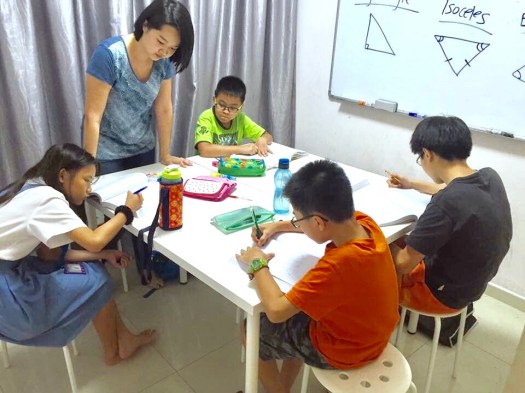
Our Punggol Tutor at eduKate SG Small tutorial classes for Primary School English, Math and Science tuition.
Punggol Tutor Primary English Math Science Tuition
Tutors marks students work and makes sure they are correct.

Punggol English Math Science Female tutor Tuition Small Group

edukate punggol tuition english science math psle
Punggol English Tuition Dunman High School IP Programme Singapore