Top 10 Things to do for the school holidays Nov-Dec

10) Botanical Gardens Orchid Gardens Students Special

Singapore Botanical Gardens organizes a programme for students, a holiday special with Orchids as their main theme.

extract from their website:

Description:

Did you know that orchids are one of the largest and most diverse families of flowering plants in the world?

From 8 to 23 November 2014, we are extending free admission to National Orchid Garden to students and accompanying adults.

Opening hours: 8.30am to 7.00pm daily (last admission is at 6.00pm).

Free admission criteria
1. Children 12 years old and below
2. Students are required to present valid student cards
3. Adults accompanying children and/or students

9) Marina Bay Sands Skypark Observation Deck

See Singapore from another point of view, its all about perspective. Your kids will love the views from the top of Singapore’s famous landmark.

extract from their website:

Please check for Sands SkyPark closures before your visit.

Prices:

S$23 for adults

S$17 for children (aged between 2 – 12 years*)

S$20 for senior citizens (aged 65 years and above)

Children under 2 years may enter for free.

  • Tickets can be purchased for a specific date up to one month in advance.
  • Same-day admission tickets can only be purchased at Marina Bay Sands Box Offices.
  • Please note that a condition of sale is there are no exchanges or refunds once the purchase has been made.

Where to buy:

Marina Bay Sands website

Ticketing Hotline: +65 6688 8826

Marina Bay Sands Box Offices

  • ArtScience Museum Lobby
  • Concierge Desk, Hotel Lobby Tower 1
  • Retail Concierge, The Shoppes L1
  • SkyPark Ticketing Counter, Tower 3 B1
  • Theatres, The Shoppes B1

for the visit
4. Not applicable to tour groups and tickets purchased in advance

8) Chinatown Heritage Centre

This is a fairly hidden gem in Singapore’s local highlights but its a truly brilliant gem indeed. Three shophouses at Pagoda Street recreates our Singapore history in complete historical settings. How our forefathers lived and eat is faithfully recreated in this beautiful building. Your kids will learn how Singapore started and its rich cultural history, and there’s even a kopitiam in the building when you get hungry or thirsty.

7) Haji Lane

Food? Check. Culture? Check. Shopping? Check. Art? Check. Haji Lane is a smörgåsbord of all things new and old, chic and traditional, young and elderly. It is the cross junction of our past, present and future. There’s lots of things to do for everyone and with Orchard and Marina Bay area a stone’s throw away, Haji Lane has established itself as a fringe community with a strong-willed resolve to show the world that there’s more to do in Singapore than eating, banking, shopping, shipping, flying and going to the movies. Walk into its varied food joints to taste local food, or run into its many beautiful arty cafe’s. Or just walk around and soak in the art installations by the side of the buildings. Shopping is a good idea too, with plenty to offer along the shophouses.

6) Dempsey Hill

My army camp was located here before it revamped itself into Dempsey Hill, the placed to go when you want to get away from the city and cosy up to some beautiful restaurants and shops. Its old world charm redefined for the present. My favourite cafe there will definitely be” jones the grocer”. And its not even exactly a cafe as they sell grocery and speciality food items.

To be Continued… wait for the next installment where we reveal the top 5. Hang in there.

by Wong Kin Leong

edukateSG

Pinevale, Tampines St 73

School Terms and Holidays 2015

Herein lies important dates for Singapore schools and our operating schedules for 2015. Parents take note that eduKate SG operates on all days except public holidays stated in SECTION 3.2 

(all information are subject to changes from MOE and is only intended to be used as a rough guideline. dated 4th Nov 2014)

extract from MOE website:

School Terms and Holidays For 2015

1.0) The school year for 2015 for all MOE primary and secondary schools will start from Friday, 2 January and end on Friday, 20 November 2015. This takes into account 40 weeks of curriculum time for teaching and learning before the start of the national examinations, and six weeks of school vacation at end of year for teachers and students.

1.1) School Calendar 2015

PRIMARY & SECONDARY
Semester I
Term I Fri 2 Jan – Fri 13 Mar
Term II Mon 23 Mar to Fri 29 May
Semester II
Term III Mon 29 Jun to Fri 4 Sep
Term IV Mon 14 Sep to Fri 20 Nov
JUNIOR COLLEGE (JC) Year 1 & Millennia Institute (MI) Year 1 MI Year 2 JC Year 2 & MI Year 3
Semester I
Term I Mon 2 Feb – Fri 13 Mar Mon 5 Jan – Fri 13 Mar
Term II Mon 23 Mar to Fri 29 May
Semester II
Term III Mon 29 Jun to Fri 4 Sep
Term IV Mon 14 Sep to Fri 20 Nov Mon 14 Sep to end of ‘A’-level exams

1.2) School Vacation 2015

2.0) The four vacation periods for schools, junior colleges and centralised institute for 2015 will be as follows:

PRI & SEC
Between Terms I & II Sat 14 Mar – Sun 22 Mar
Between Semesters I & II Sat 30 May – Sun 28 Jun
Between Terms III & IV Sat 5 Sep – Sun 13 Sep
At End of School Year Sat 21 Nov – Thu 31 Dec
JC Year 1,
MI Year 1 & MI Year 2
JC Year 2 &
MI Year 3
Between Terms I & II Sat 14 Mar – Sun 22 Mar
Between Semesters I & II Sat 30 May – Sun 28 Jun
Between Terms III & IV Sat 5 Sep – Sun 13 Sep
At End of School Year Sat 21 Nov – Thu 31 Dec End of ‘A’ Level exams – Thu 31 Dec


3.0) The scheduled school holidays and public holidays for 2015 will be as follows:

3.1) Scheduled School Holidays 2015

Youth Day Sun 5 Jul
(The following Monday, 6 Jul 2015 will be a scheduled school holiday)
Teachers’ Day Fri 4 Sept
Children’s Day
for primary schools and primary sections of full schools only)
Fri 9 Oct

3.2) Public Holidays 2015

Term I New Year’s Day Thu 1 Jan
Chinese New Year Thu 19 Feb
Fri 20 Feb
Term II Good Friday Fri 3 Apr
Labour Day Fri 1 May
Vesak Day Mon 1 Jun
Term III Hari Raya Puasa Fri 17 Jul
National Day *Sun 9 Aug
Term IV Hari Raya Haji Thu 24 Sep
Deepavali **Tue 10 Nov
Christmas Day Fri 25 Dec
*The next day, Mon 10 Aug 2015, will be a public holiday.
**Tentatively, Deepavali will fall on 10 November in 2015. This date will need to be reconfirmed against the Hindu Almanac when it is available. Should there be a change in date, the Ministry of Manpower will issue a media release to announce the change accordingly.


4) The school terms and holidays for 2015 is available on the MOE’s website atwww.moe.gov.sg/schools/terms-and-holidays/2015/


prepared by Wong Kin Leong

edukate SG

Tampines St 73

Singapore

New Syllabus 2015 Primary School English, PSLE MOE Syllabus, EduKate Singapore.

English Tuition News update November 2014:

Dear Parents,

Please be informed of the new format change in Primary School English, Singapore for 2015. This applies to PSLE English exam format and class practices, most noticeable in the Composition and Comprehension section. This change shall affect and include the PSLE syllabus for English, 2015 by Ministry of Education, MOE Singapore.

So parents buying the new assessment books or textbooks, kindly purchase only the latest revision or wait till the new books are out before purchasing. Currently, I still see the 2014 Assessment books being sold in the stores and it will be a waste buying that version to replace with the new ones later on.

Here is a summary of the changes, as informed by the MOE. A copy of the syllabus is included at the bottom of this page. (downloaded from SEAB website)

The Same:

English skill levels are the same as PSLE 2014. The syllabus remains as the STELLAR programme introduced by MOE in 2013 for Primary 4 students. This is the chronological order of revisions to MOE’s EL Syllabus.

  • 2001-New EL Syllabus introduced.
  • 2006-EL Syllabus review by EL Curriculum and Pedagogy Review Committee
  • 2010-incorporation of changes recommended by 2006 Review Committee to previous 2001 EL Syllabus
  • 2013-STELLAR Programme starts for Primary 4
  • 2015-revision of STELLAR programme only to format of PSLE English Language (EL) and Foundation English Language (FEL)

The Changes:

New Assessment books for PSLE ENGLISH SEAB Syllabus 2015

2015 changes to PSLE EL and FEL Papers are as follows:

  • Continuous Writing: Changes from optioning 2 fixed scenario question to 1 visual stimulated question. Freedom to write using  narrative, exposition, descriptive or any appropriate methods taught in school. Approach to story writing from different perspectives, leading to multiple plots for different candidates. Creative writing and freedom in thought seems to be embraced in this revision.
  • Comprehension: New format with tables and different ways to answer questions, requiring students to be able to adapt answering skills to changing situations.
  • Listening Comprehension: Higher amounts of visual stimulation so that candidates will require a higher mastery of their cognitive skills to answer questions properly.
  • Oral Communication: Picture Discussion and Conversation will be replaced to Stimulus based Conversation. It shall be themed to the reading aloud piece and shall require students to give their own views on the topic. This is in line with the MOE to require students to be more social and interactive, improving their social skills for the 21st Century.
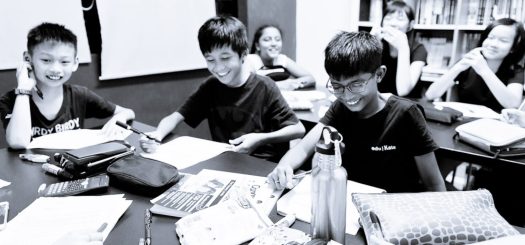
P6 eduKate Students at Tampines Tuition Centre
eduKate Tuition Class SEAB  PSLE Syllabus Primary 6 English Tuition at Tampines
eduKate Tuition Class SEAB PSLE Syllabus Primary 6 English Tuition at Tampines
eduKateSG Primary Students at Punggol Tuition Centre Prive Condominium doing PSLE SEAB Syllabus English Lower Primary 3 and 4
eduKateSG Primary Students at Punggol Tuition Centre Prive Condominium
doing PSLE SEAB Syllabus English Primary 4 and 5

Here is a copy of the PSLE English Syllabus by MOE:

PSLE ENGLISH LANGUAGE SYLLABUS 2015

Implemented from the Year of Examination 2015

PURPOSE OF EXAMINATION

The purpose of the examination is to assess the candidates’ attainment in English Language based on the Learning Outcomes stated in the English Language Syllabus 2010: Primary & Secondary (Express / Normal [Academic]). The Learning Outcomes form the basis for the assessment objectives listed on page 3.
ASSESSMENT OBJECTIVES In this English Language examination, candidates will be assessed on their ability to:

In Paper 1 (Writing)

  1. AO1  write to suit purpose, audience and context in a way that is clear and effective
  2. AO2  use appropriate register and tone in a variety of texts
  3. AO3  generate and select relevant ideas, organising and expressing them in a coherentand cohesive manner
  4. AO4  use correct grammar, spelling and punctuation
  5. AO5  use a variety of vocabulary appropriately, with clarity and precision

In Paper 2 (Language Use and Comprehension)

  1. AO1  demonstrate comprehension of a range of texts at the literal and inferential levels
  2. AO2  show understanding of implied meaning, and make judgement and evaluation, byreading and/or viewing closely and critically
  3. AO3  show understanding of how contextual use of lexical and grammatical itemsshapes meaning
  4. AO4  demonstrate the correct use of grammar, spelling and punctuation, and theappropriate use of vocabulary in given contexts

In Paper 3 (Listening Comprehension)

  1. AO1  demonstrate understanding of the content of a variety of spoken texts at the literal and inferential levels
  2. AO2  identify key messages, main ideas and details in a variety of spoken texts
  3. AO3  infer and draw conclusions by listening critically

In Paper 4 (Oral Communication)

  1. AO1  read with good pronunciation, clear articulation and appropriate intonation in order to convey the information, ideas and feelings in a passage
  2. AO2  produce a well-paced, fluent reading of a passage
  3. AO3  express their personal opinions, ideas and experiences clearly and effectively inconversing with the examiner
  4. AO4  speak fluently and with grammatical accuracy, using a range of appropriatevocabulary and structures
EXAMINATION FORMAT Candidates will be assessed in the following areas:
PAPER
COMPONENT
ITEM TYPE
NO. OF ITEMS
MARKS
WEIGHTING
DURATION
1 (Writing)
Situational Writing Continuous Writing
OE OE
1 1
15 40
27.5%
1 h 10 min
2 (Language Use and Comprehension)
Booklet A: Grammar Vocabulary Vocabulary Cloze Visual Text Comprehension Booklet B: Grammar Cloze Editing for Spelling and Grammar Comprehension Cloze Synthesis / Transformation Comprehension OE
MCQ MCQ MCQ MCQ OE OE OE OE OE
10 5 5 8 10 12 15 5 10
10 5 5 8 10 12 15 10 20
47.5%
1 h 50 min
3 (Listening Comprehension)
Listening Comprehension
MCQ
20
20
10%
About 35 min
4 (Oral Communication)
Reading Aloud Stimulus-based Conversation
OE OE
1 passage 1 visual stimulus
10 20
15%
About 10 min (5 min preparation time; about 5 min examination time)
Total
200
100%
Legend: MCQ Multiple-choice questions OE Open-ended questions

Paper 1 (Writing)

Part 1 (Situational Writing): Candidates will be required to write a short functional piece (e.g. letter, email, report) to suit the purpose, audience and context of a given situation.
Part 2 (Continuous Writing): Candidates will be required to write a composition of at least 150 words in continuous prose on a given topic. Three pictures will be provided on the topic offering different angles of interpretation. Candidates may also come up with their own interpretation of the topic.

Paper 2 (Language Use and Comprehension)

Candidates will be assessed on their ability to use language correctly and to comprehend visual and textual information.

Paper 3 (Listening Comprehension)

This paper comprises 20 multiple-choice questions which test candidates’ ability to understand spoken English. The texts may be in the form of news items, announcements, advertisements, instructions, explanations, conversations, speeches and stories. Graphic representations will be used for the first seven items. Each text will be read twice. Time will be given for candidates to read the questions before the first reading of each text.

Paper 4 (Oral Communication)

For Reading Aloud, candidates are assessed on their ability to pronounce and articulate words clearly, as well as their ability to read fluently with appropriate expression and rhythm.
For Stimulus-based Conversation, candidates are assessed on their ability to give a personal response to a visual stimulus and engage in a conversation on a relevant topic.

Press Releases (from moe.gov.sg)

September 3, 2012

Learning of English to Develop 21st Century Competencies

STELLAR English for Upper Primary to Start from Primary 4 Next Year

1) Upper primary students can look forward to more interactive English lessons with the implementation of the revised 2010 English Language (EL) Syllabus at Primary Four from 2013. The new syllabus incorporates a sharper focus on 21st century competencies to enable our students to communicate effectively and confidently in the globalised world. Students who are taught the new syllabus will sit for the revised Primary School Leaving Examination (PSLE) EL papers in 2015.

2) The Ministry of Education (MOE) reviews the EL Syllabus regularly to ensure that it is relevant to the changing environment and profile of our learners. The 2010 EL Syllabus builds on the strengths of the 2001 syllabus, and aims to equip our students with the language skills they need for day-to-day communication and for the next stage of learning. It emphasises building a strong foundation in the language and enriching language learning for all as recommended by the EL Curriculum and Pedagogy Review Committee in 2006.

3) The key feature of the new EL Syllabus is a systematic approach to teaching language skills, using rich texts and a variety of language resources to enable students to appreciate the language beyond the classroom. This approach is delivered through the Strategies for English Language Learning and Reading (STELLAR) programme in primary schools.

4) The STELLAR programme, developed by MOE, provides the instructional materials, teaching strategies and training to enable teachers to implement the EL syllabus effectively. The STELLAR programme is designed to cater to a diverse range of EL learners in our school system and was developed based on research carried out in Singapore schools. As part of the programme, EL is taught through stories and texts that appeal to children, with explicit grammar instruction. Students are provided with opportunities to express themselves in an environment where language learning can be enjoyable yet purposeful. Through the reading of engaging stories in class, students get to speak extensively, discussing and sharing their views with the teacher and their peers. The main purpose is to build students’ confidence in speech and writing, and enhance their learning of the language. Please refer to Annex A for an overview of the 2010 EL Syllabus. More information on the STELLAR programme can be found at the STELLAR website.

Assessment

5) The revised PSLE English Language (EL) and Foundation English Language (FEL) examination papers will be introduced from 2015, in line with the changes to the teaching syllabus. The language skills tested in the revised PSLE are the same as those tested in the current PSLE. However, the revised examination papers give greater emphasis to the 21st century competencies in the teaching syllabus by:

  • Giving students greater scope for providing personal response in speaking and writing
  • Greater emphasis on viewing skills integrated with listening and reading

6) The changes to the examination papers are outlined in Annex B.

Annex B

Revised PSLE English Language (EL) and Foundation English (FEL) Examinations

The revised English Language (EL) examination comprises four papers. The main revisions are as follows:

  1. For the Continuous Writing component of Paper 1, instead of two questions with fixed scenarios for candidates to choose from to write a narrative, one topic is offered which can be approached from any one of several perspectives. To help candidates think about the different perspectives of the topic, visuals will be provided. In addition, candidates will be free to write a narrative or exposition or any appropriate text type learned in schools.
  2. There will be a new Visual Text Comprehension section in Paper2 in the form of multiple choice questions (MCQs). One such example would be questions based on a poster.
  3. For the Comprehension Open-ended section in Paper 2, the types of questions will now be varied and could include, for example, tables which candidates will fill in using information from the passage.
  4. The Listening Comprehension paper will have more items with graphic representation compared to the existing paper.
  5. For the Oral Communication paper, the existing Picture Discussion and Conversation components will be replaced by the Stimulus-based Conversation component. Candidates will give their personal response to a visual stimulus that is thematically linked to the Reading Aloud passage. Candidates will then move on seamlessly to a discussion on a relevant topic.

The revised Foundation English Language (FEL) examination comprises four papers. The main revisions are as follows:

  1. For the Continuous Writing component in Paper 1, the visual stimulus, which is a series of three framed pictures in the current paper, will include an additional fourth frame featuring a question mark in the revised paper with the provision of helping words for each of the first three pictures. The picture-in- series format is to help candidates sequence their story while the question mark in the last frame is to give students the opportunity and flexibility to give their own endings to their stories.
  2. For the Comprehension Open-ended section in Paper 2, the types of questions will be varied (e.g., graphic organisers, multiple-choice questions and sequencing-type questions might be used). Pictures may be featured together with the comprehension passages.
  3. The FEL Listening Comprehension paper will also feature more items with graphic representation compared to the existing paper. There will be a new listening task in which candidates listen for main ideas and select the appropriate response from the three options for each MCQ.
  4. For the Oral Communication paper, the FEL paper will also feature a Stimulus-based Conversation component in place of the existing Picture Discussion and Conversation components.

The revisions are summarized below:

English Language

Foundation English Language

Giving students greater scope for providing personal response in speaking and writing

Paper 1(Continuous Writing): Greater scope for writing from different perspectives, and flexibility for candidates to choose any text type such as narrative or exposition.

Paper 4 (Oral Communication): New Stimulus-based Conversation component will feature a context familiar to students that will provide a springboard for conversation.

Paper 1(Continuous Writing): The picture series ends with a frame with a question mark to allow candidates the flexibility to give their own endings to their compositions.

Paper 4 (Oral Communication): New Stimulus-based Conversation component will feature a context familiar to students that will provide a springboard for conversation.

Greater emphasis on viewing skills integrated with listening and reading

Paper 2 (Language Use and Comprehension): New Visual Text Comprehension section that features a multi-modal print text which will include visuals such as pictures, diagrams, charts, graphs and tables together with the written texts.

Paper 3 (Listening Comprehension): Increase in the number of questions with graphic representation.

Paper 2 (Language Use and Comprehension): Pictures may be featured together with the Comprehension passages, where appropriate, to help students comprehend the texts.

Paper 3 (Listening Comprehension): Increase in the number of questions with graphic representation.

Disclaimer: the above is downloaded from seab.gov.sg moe.gov.sg and is correct as of 15th April 2015. (last update from edukatesg.com)  Any revisions from this date on shall be updated by edukatesg.com and updated with notes. This page is intended for use by edukate Singapore Tuition Centre students and parents for their reference and examination planning schedule. Kindly disregard if otherwise.
Thank you.

For an experience of our dynamic classes and how we can empower your child,

  • Ms Teo Yuet Ling +65 8222 6327
  • admin@edukatesg.com
edukate Punggol Tuition English Math Science Creative Writing
Punggol Tuition Centre for English Math and Science
Punggol Tuition for Primary Science English Mathematics
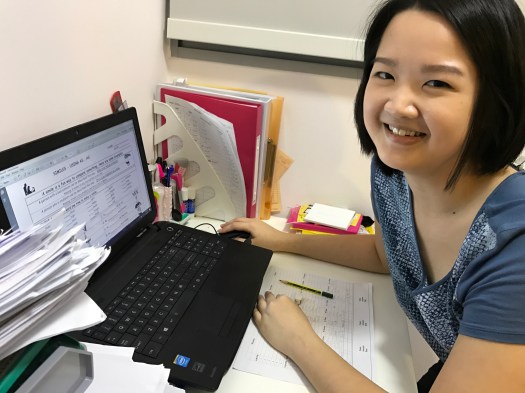
Female Punggol tutor Yuet Ling preparing materials for English, Maths and Science tuition. We provide up-to-date, innovative and fun materials that challenge our students intellectually.
Punggol PSLE English Mathematics Science Primary Tuition
PSLE English Singapore Tuition. MOE Syllabus. Female Tutor
edukate punggol english maths science primary tuition small group
Tutor Yuet Ling in Melbourne, Australia. Primary English PSLE Tuition Programme.

How to improve discipline in a student

Discipline, the main ingredient to success. Sprinkle with concentration, a dash of  determination and double boil with patience. That’s the making of a properly executed education. In every education system around the world, the recipe above are quality prerequisites because students spends years in school before gaining their certification and joining the workforce. The need to have the discipline to stay on course, and the patience to knock in the hours (or in fact the years before they reach university and graduate) are what causes only a small percentage of students that can reach their goal of obtaining their degree. Even though over the years, this percentage has grown in Singapore, it still takes a lot of effort and consistency to win this studying game.

So what separates the wheat from the chaff?

Take the recent GCE “O” level results and ask the successful candidates what they did in preparation for their examinations and you will get the common reply of countless studying hours, sitting themselves down by their quarters. That takes discipline, and a matured mind. Its the ability to do more than just the ordinary, the discernment that the future grows brighter with a better education, and to find the energy locked within to do that extra mile. Again, this takes discipline. They could have been out playing, watching a movie, hanging out with friends or god forbid, playing computer games. Instead, they took the back-breaking path and stood firm in the face of distractions.

So how do we cultivate discipline and reap a successful harvest?

One of the most important ways to cultivate discipline is to complete tasks. And start when they are young. Tasks don’t have to be onerous, or even exacting as this will put the child off. It does not need to be annoying too, like taking out the trash or washing the dishes. It could be something fun, like games, or doing jigsaw puzzles, or even reading a book. The idea is to teach your child that whenever you set about a task, you should complete it. Think of what goes through the mind of someone running a marathon. Grueling, definitely. But add the sense of self accomplishment at the end of the race, and it all makes it worth it. That’s what we should help the child feel. That once you complete the task, no matter how arduous, the triumphant result outweighs its tribulation.

There are many times that children gives up too easily, and parents lets them do so. And, the parents completes it for them, or it just stops altogether. Its easy to see why this gives out all the wrong signals to the child. Inability to complete the job and see through the full cycle means that the child does not learn anything from that job. This could lead to pessimism that things cannot be done, laziness creeping in, and an unproven bout of self censure.

Its like baking a cake. Do up the dough, all the ingredients nicely folded in, let it rise, into the oven at 350, and out it comes. If you don’t try the cake yourself at the end, you will never know if you succeeded in baking a tasty cake, or it could be just a ho-hum piece of dough that you just created. Its the last steps that makes all the difference, self evaluation. When you are learning how to bake a cake, you have got to eat it too. Try it out, see if its any good, evaluate the outcome to see if its a success or failure, take notes on how it looks and tastes, and think of how the baking can be refined. Then set off and bake another cake, now improved, and that process gets repeated until you have a proud product that can win the hearts of many. (Nevermind if your kids complain of the copious amounts of cakes they have to eat before you get there) A healthy postmortem documentation of the process by oneself creates a greater self upon further refinement, an intimate knowledge of what has been done, and what else can be improved.

In every process of learning, there needs a leverage of self evaluation on the completed cycle. Students are taught by a teacher, learns it, understands it, practices sums of it, memorizes it and finally, gets tested on it. Something is missing from this formula. and that is “self evaluation”. For a good score in the final test, there is a need to self evaluate before being tested. To see if all the fundamentals of the class are properly digested. Much akin to the baking process, a baker who never tastes their own cakes, will never have a winning product. How can one sell something that doesn’t know how their products tastes? Its just silly. And that is what students must do too. To complete the cycle, a student must always evaluate themselves and improve themselves before they finally go for their finals. Making sure of this is imperative to a successful candidate. Knowing where went wrong, and correcting themselves gives them the confidence they need to attempt a major examination.

Again, that is where discipline comes into play. It takes discipline and determination for a child to sit down and study the needed hours but more if the child wants to complete every task and evaluate themselves to know if they are doing it right. Methodology, and creating an efficient learning program will help too in this case.

Generally, completing a task like a major examination takes years for the students and the daily grind of school could take the wind off of their sails by the time the examination approaches. There needs a steely determination and the discipline to keep themselves on track, with their heads up high and constantly be above of their curriculum to perform well. But if they complete their daily tasks consistently, eventually, they will complete their examinations with ease. Like a very popular Malay idiom, “sedikit, sedikit, lama lama menjadi bukit” (little by little, a long time later, makes it into a hill), doing well in their final examination is the culmination of all the small tasks that were completed earlier on in their studies. And sweet old Mr and Mrs Discipline gets you there.

edukate Punggol Tutor English Mathematics Science Tutor Primary Secondary
Small group tuition for English Math and Science tuition.

cropped-edukate3.jpg

edukate Punggol Tuition English Math Science Creative Writing
Punggol Tuition Centre for English Math and Science
edukate punggol tutor for primary secondary english mathematics science tuition
IB Tuition Centre Tampines English Tuition PSLE IP IB GCE IGCSE SAP Tuition by Top RJC, ACJC, SAJC, TPJC Tutors

the 4 pillars of learning

So with the need in the 21st Century to be highly educated comes the need to provide an education that befits the dynamism of such an aim.

Society changes rapidly, with the industrial revolution going the way of the dinosaurs, the digital revolution maturing and now, the social revolution is upon us with Facebook, Twitter and forums gathering no moss with such an aggressive momentum onto our current lives. Everyone is a friend of someone now, and information travels around the globe faster than the blink of an eye.

Students are starting to mature in this age as well, incorporating digital elements early in life to be social individuals, exchanging thoughts and communicating with these tools. No longer are we surprised that our students approach us and know so much more than yesteryear. No longer are we surprised that they gulp information and understand the intricacies of the fabric of life.

So what do we do with such changes? It would be foolish not to keep up and make changes that would take advantage of these changes. Never sit still and let technology overcome us, and turn us into the relics that would make age gaps look ominous, outcast adults from their children and have our society alienate itself between the young and poor. This is where a page from United Nations website started looking very relevant to our lives, which I have included in this article as follows:

The following are an extract of an outline with regards to education as stated in United Nations website:

http://www.unesco.org/new/en/education/networks/global-networks/aspnet/about-us/strategy/the-four-pillars-of-learning/

“The four pillars of learning are fundamental principles for reshaping education:

Learning to know: to provide the cognitive tools required to better comprehend the world and its complexities, and to provide an appropriate and adequate foundation for future learning.

Learning to do: to provide the skills that would enable individuals to effectively participate in the global economy and society.

Learning to be: to provide self analytical and social skills to enable individuals to develop to their fullest potential psycho-socially, affectively as well as physically, for a all-round ‘complete person.

Learning to live together: to expose individuals to the values implicit within human rights, democratic principles, intercultural understanding and respect and peace at all levels of society and human relationships to enable individuals and societies to live in peace and harmony.”

That is where we have to take note, to participate in the global economy and society, we have to keep ourselves not only mentally challenged, but physically fit as well. To keep upgrading ourselves to the new tools and skills, and never to stop changing ourselves, i.e to move with the times. Evaluation is the reset button of our lives. Re-evaluating our worth, our knowledge, and what new skills we need to keep ourselves relevant are the important points of what is written above.

So what are we doing at eduKate? We have never once stopped evaluating our skills and upgrading our techniques and tools. In 2014, there will be another suite of changes that will be implemented from Nov 2013 all through to Feb 2013. These comprises with a move to a new premise, new equipment for the students, and also new ways of teaching. Again, evaluation is the reset button we have, which means, we will move ahead with what works, and delete those that don’t, which was exactly what we have done in 2013. With positive outcome for our students and resulting with a group of positively happy parents.

Of course, the academics are not the be-all and end-all of a holistic education, which we are all too aware of. That is where we strive to keep our students well rounded and relevant, for the future is a constant question mark, and the best the students can do, is to be fleet footed and all ready for what is about to happen.