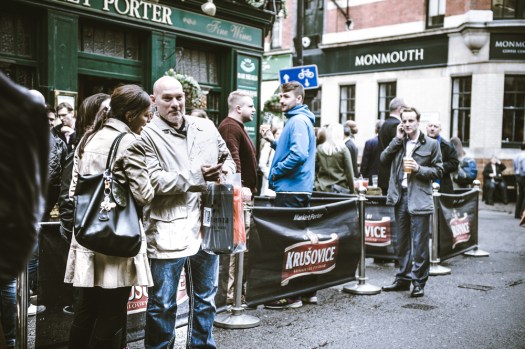
Here’s photos of Borough Market, London.












- Borough Market caters to everyone’s needs and people come from all over the world to visit this famous landmark.

















Singapore Mathematics Tuition Centre
The Math Tutor for Small Group Tuition for PSLE, GCE O level IGCSE IB Diploma IP Programme Additional Maths for Primary and Secondary Levels. Top Singapore Tutor with two decades in education.

Here’s photos of Borough Market, London.
English Language tuition in Singapore has gone a long way since our independence and this can be attributed to three main components of increased business opportunity, parent’s desire for their children to be job competitive and the government’s push to be glocal.
Thinking glocal is how we can be successful in a nation that takes pride in being the centre of the world. We are the avenues between the East and West, and our geopolitically advantageous positioning has put our small island onto centre stage of the international market by providing professional, competitive, stylish and efficient flow of air/sea traffic, a robust financial market, plus a hardworking and talented workforce that has adopted the English Language as their lingua franca.
The English Language, with 1 500 million speakers, of whom only 375 million are native (statistica.com), are the highest adopted language in the world. This is seconded by Chinese Language with 1 100 million speakers but are predominantly native speakers of 982 million. With the rest of the languages tailing far behind these two.
The dominance of these two languages means that commanding a mastery in either of the language lets you talk to 1 in every 5 or 6 persons living on earth. In Singapore, the Chinese population that learns Chinese as their second language (and English as a First Language) in school drives these statistics to 1 in every 2.7 person on earth. And that is a lot of people that bilingual English/Chinese speaking Singaporeans can converse with. Coverage is key to a successful business plan and if a business entity can serve a wider network, that unhinges latent opportunities and make connections with markets that would have been otherwise foregone.
This is an advantage that keeps us relevant. The ability to communicate with almost half of the world means we can do business with any country, help anyone in times of need, but more importantly, be a friend with everybody. It is where we become truly global, not only by going out and making friends, but to be a welcoming host and the world comes to you.
Inculcating English into Singaporeans started with our education systems 50 years ago. Compulsory English examination passes to advance, with every subject in school taught in English (minus ethnic languages) means mastery would be advantageous in learning fast and an ability to grasp complex technical concepts. That universities are lectured in English as well, attainment of a degree, a professional career and ultimately, survival, hinges on the proficiency of English.
But that is a 20th century strategy: language assimilation.
Latest generations of 21st century English-speaking Singaporeans pass on their English to their children as if the equivalent, a native speaker. English-educated Singaporeans now speak, read, write English as their first language and their children don’t need to learn “A” for Apples in Primary 1 like 40 years ago.
Our children is born into an English speaking household and vernacular to English. We have evolved and our children have become as native an English user as any other.
Our diverse ethnicity and international positioning keeps English relevant to our lives. Over generations, the English Languge has proven to be a viable marriage into our culture, keeping our traditions whilst adopting Western cultures and views that helps rather than deter. The ability to communicate with most of the world keeps us competitive and economically viable.
“The Limits of my language is The Limits of my World”-Ludwig Wittgenstein
It makes us globally active, engaging, dynamic and yet keeps us intimately connected with our immediate neighbors. Making friends where it would have been near impossible in our multi-cultural nation. Thinking glocal helps when our nation support such diverse ethnic groups where finding a common language would mean learning 4-5 languages just to talk to our neighbours. English breaks down barriers and carries our thoughts. To understand, first, we need to convey in a common language.
So where next for English in Singapore? We will continue evolving. Our primary education system for English Language just got tweaked this year after 4 years of research into what we need to improve in our education. There is a push to change from the government sector to include creative aspects into our system.
There is also a sudden increase in international awareness that Singapore is a global city, thanks to Marina Bay Sands and the yearly Formula 1 events. One can’t be hospitable unless one communicates and understands hospitality.
And what about English as an art form? Literature, poetry and sonnets. It is the existence of English as an art form, for the sake of art itself and nothing else that a society starts to fully appreciate the English Language. Appreciate the emotional powers and its beauty instead of just English being a tool of commerce or conversation. Appreciate that culturally, attainment of English as art means that we perhaps have arrived rather than be bystanders looking into a prestigious country club.
Thinking glocal helps when our nations’ resources is human resource. Keeping a common framework of English provides the bridge to our conversations and a strong spine to support our communication infrastructure. It is our bread, butter, main course, wine and sweet pastries. It provides for everything, and then some.
Primary PSLE Results SEAB Syllabus MOE English, Math, Science Tuition specific to Poi Ching School Primary Syllabus. We take pride as fine educators, wise mentors, supporting motivators and creative innovators with your child’s development turning them into top students, focussed and worldly-wise.
Referrals and recommendations from our loyal clients abound with majority of eduKate Tampines students coming from Poi Ching School.

We also locate our tuition centre close to Poi Ching School so that your child has easy access to our top tutors from alma mater colleges RJC, ACJC, SMU, NTU. We are 50m away and takes 5 mins to walk over from Poi Ching.
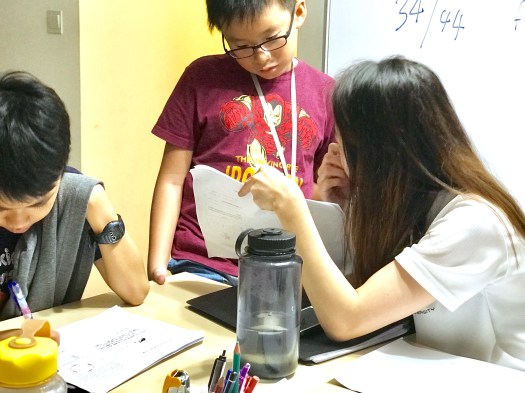
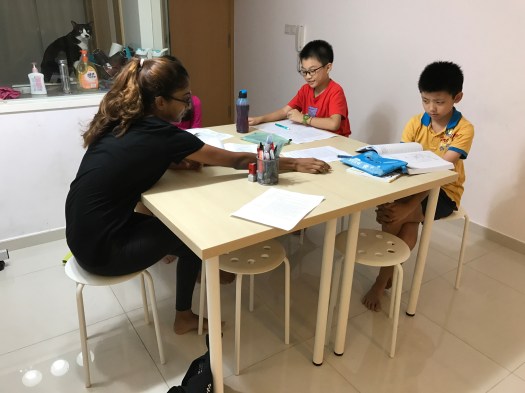
We are a group of university graduate tutors with expert knowledge in the current MOE syllabus. We teach to understand everything according to the syllabus and then move onto solving challenging sums that students will encounter in their exams.
Our classes are conducted in a fully air-conditioned environment with the average tutor/student ratio of 1:5.
Our schedule in eduKate Tampines Tuition Centre caters specifically to Poi Ching’s school timetables and CCA’s. All new students will not have problems getting a suitable time slot in our class. One less headache for students and parents to attend our lessons.
Give us a call to set up a tour around our centre and know more about our unique tuition programmes. Our quality programmes are developed to encapsulate a holistic development of your child’s psyche and let students gain confidence, enthusiastic in learning new things, become gracious and sociable.


Our eduKate Tuition Centre “Team Building and Empowerment” programme for PSLE Primary students:


Call us to join the most progressive tuition centre in Tampines:


Office Hours:
or email us at
Our addresses for eduKate Tuition Centre:


Idioms can add spice onto the canvas of your composition writing and when appropriately used, gives a dramatic effect and shows the mastery that you have attained. The idea here, while attempting PSLE, is to have a list of go-to tools that would cover almost every situation that you can come across. This helps pepper your composition, adding flavour and widen the spectrum of colour to your writing.
-a group of words established by usage as having a meaning not deducible from those of the individual words (dictionary.com) Here’s 10 most useful idioms that you can use to almost every composition that you will see in PSLE.

The following is a summarised class material for PSLE EL Syllabus under topic “types of character” that shall be used by eduKate for teaching PSLE candidates in their attempt of the PSLE EL Composition writing section.
Major characters are characters that appear sufficiently in the story to drive the story forwards. They are also characters that will let readers identify with and bond throughout the story.
Minor characters are characters that appear in localised smaller parts of the story, and could add to driving the story, or not driving the story at all. Minor characters can be used to add to the richness of the story and provide a distraction or comic relief to the reader.

A protagonist is the main character and driver of the story. It creates movement of the plot and engages the reader’s imagination and empathy. The protagonist usually has character traits that readers identify with and is usually the hero or heroine of the story. This is not always true, with protagonists that can be evil, or even neutral to make things interesting for ther reader. The protagonist usually solves the conundrum in the story, or provides for a solution to the moral dilemma presented within the theme taken by the writer.
An antagonist is the counter character to the protagonist, creating friction and problems for the protagonist to negate. The antagonist is the other driver of the plot and, together with the antagonist, moves the plot to its conclusion. The antagonist presents a counter balance to the protagonist and could give a valuable insight for the reader into the protagonists character/actions/decisions. Again, the antagonist might be evil in nature, or could even be a hero in the story, which gives a twist to the general perception and again, makes things interesting for the reader.
Dynamic Character
A dynamic character undergoes personality changes in the story plot, developing into another character or attaining a different outlook/experience. It usually takes a pivotal event in the plot where the character experiences monumental tasks and readjusts to cater for the change.
Static Character
A static character does not undergo any changes in the story. Usually static characters does not undergo any changes because throughout the story, a static character is hardly affected by climactic problems and soldiers on solving it.

Round Characters
A round character is fully developed to be complex and realistic. Depth of character and attention to details makes round characters malleable to changes in the plot and readers sympathise with round characters easily through empathy. Round characters also mimic reality and gives readers an insight into the character and keeps the story interesting.
Flat Characters
The reverse of round characters, flat characters are not fully delineated and usually only has one or two traits to carry through the story. Usually not the main character in the story, flat characters are important tools used to provide comic relief, or even instrumental to a change in the plot.
Foil
A foil is a character that contrasts another main character to make readers appreciate the difference. The intention of the foil is to make readers understand the other character its “foiling” better.
Symbolic
A symbolic character is a character that symbolises certain ideas or morals of society. The intention of symbolic characters are for readers to identify the hidden trademarks within the story and see its relevance to the theme of the story. It denotes clever writing and makes the reader appreciate its intelligence and its intrinsic fabrication by the writer.
More news on university ranking in Singapore for today as Singapore falls to 15th place according to this article from straitstimes.com with an extract of it below:
by Amelia Teng
“SINGAPORE – Singapore has fallen 12 spots to 15th place in a ranking of the world’s best cities for university students.
Last year the London-based educational consultancy Quacuarelli Symonds (QS) ranked the Republic third in the world and the best in Asia.
However when it released this year’s table this morning it had plummeted, which QS said was due to adjustments made to some factors.
Cities were given scores across five categories for 18 measures, including four new ones that looked at their level of pollution, safety, transparency and tolerance.
Existing indicators included affordability and employability
Wong Kin Leong
eduKate
Tuition Tampines
Tuition Punggol
Here’s some perspective of our education in Singapore. All data obtained from http://www.singstat.gov.sg
Singapore literacy rate (for 15 years and above) is at 96.5% with males at 98.5% and females at 94.6%. However, there is no change for males literacy from previous years but females upped 0.2% from 94.4% previously.
Singaporeans with Secondary education or higher (for 25 years and above) has increased from 67.7% to 68.8% with males 71.8% and females 66%.
Our mean years of studying are 10.5 years with males at 11.0 years and females at 10.0 years.
Also interesting, our social indicators have improved with 20 doctors for every 10,000 population as compared to 19 doctors from the previous data.
by Wong Kin Leong eduKateSG
Pinevale Tampines
Whether you are preparing for GCE, GCSE, IB, PSLE, SAT, or any examination, it is imperative to get your brains fit for the exams. Try these few websites for free brain teasers:
1) Brainmetrix.com contains general games that tests most of brain activities. IQ based, Cognitive and even Sudoku can be found free in here.

2) GamesForTheBrains.com is also a general brain teaser free games website that are simple for children to navigate. Just click on the links you find on the frontpage and you are all set to go.

3) BrainHQ.com is another website but it is slick and organised into memory, attention, brain speed, people skills, intelligence, and navigation exercises. However, it does need a sign up to get the basic tier games, and to access the full site there is a purchase involved.

by Wong Kin Leong eduKateSG Pinevale Tampines.
1) Get yourself a dedicated studystation.
Have your assessment books ready and arranged at arms length. Have all your equipment organized within a radius of 1.5 metres. Have water, food and whatever you need to be comfortable near you so that you don’t have to walk away to pick things up. Have a dedicated studystation that does not need packing and unpacking every time you study. It is yours and you do not need to put all your books away after you are done studying.
That way, the moment you sit down, you are all set to study. Walk away when you are tired, and when you are refreshed, come back and study. No packing. No unpacking. It is always there. The easier you settle down to do your studies, the less time and energy you waste walking around getting your studying organized. Because it is always there for you and organized as well in a small footprint of your house. You don’t have to grab things from all over the house when it is located only in one place.
2) PSLE is like any other examination.
Every time you go for examinations, treat it as if it is your PSLE. Primary 6 has 4 main exams before the PSLE. CA1, SA1, CA2, Prelimns. Treat all these exams like PSLE. Study hard, prepare for it, and keep evaluating where you can improve yourself. With experience, PSLE will be a breeze and you’ll get it done proper. Organize yourself into studying for English PSLE, Mother Tongue PSLE, Science PSLE and Mathematics PSLE and when the day comes, psyche yourself up and get those grades.
3) Improve your memory.
Without a good memory, it will always be the problem of learning something and forgetting it altogether. So why start to begin with? Spend time memorizing what you learn and do it the same day that the topic was taught to you. Also learn tricks to improve your memory.
Generally speaking, to memorize anything is basically a case of not forgetting. Hence, the more we spend time repeating something, the lesser the chance that we will forget something. Come back again and test yourself another day just to make sure you remember it and over time, it will be in your long term memory banks.
4) Speed is mind over matter.
Not completing a paper is the worse way one can lose marks. PSLE in Singapore generally runs within a week and the papers are completed in 1-2 hours. There are situations where students mismanage time and spends too much time on questions. To solve this problem, allocate time for your studies and set an alarm whenever you attempt a question.
General guidelines are: 1 mark for every minute.
So if you attempt a 5 mark question, you are only allowed 5 minutes to complete it. Past that, you will need to jump this question and start doing the next question. Come back and attempt it when you have completed the rest of the questions.
5) Ask and you shall receive.
This is by far the most important thing to do for PSLE preparation. Teachers, parents, friends and family will not know what you don’t know unless you ask. The more you communicate your needs, the more people can help. Tell them what problems you face. There is no problem so big it cannot be solved and no problems too silly that they will make fun of you. Everyone has to start learning from basics sometime before they become masters. And master you will.
“He who asks a question is a fool for five minutes; he who does not ask a question remains a fool forever.” – Chinese proverb
 Singapore Mathematics Tuition Centre