The Math Tutor for Small Group Tuition for PSLE, GCE O level IGCSE IB Diploma IP Programme Additional Maths for Primary and Secondary Levels. Top Singapore Tutor with two decades in education.
English Tuition Primary Class Online Punggol Waterway Point Singapore with the topic “The”, “Three” and “Tree”.
A most problematic pronunciation for Singapore Primary school student, these words are ironed out in our English Tuition Classes which habitually makes one sound like the other if left untreated.
“The”
The word “The” are usually pronounced wrongly as “duh” by Singapore students when it should be;
Usually the problem is caused by the letters “th” and said with a “short” tongue in Singapore. It ends up sounding with a “d” like dead, down, duh=the.
“Three” and “Tree”
These two words are commonly mispronounced too, with Singapore Primary students saying the word “Three” as “Tree”.
Of course, we aren’t the only ones that gets it wrong, with this youtube video which goes on to Three, Tree and Free.
Start getting your child to say these words properly and keep at it.
Score in Oral examinations!
For English lessons, tuition, enrichment classes and creative writing courses, call Yuet Ling +65 8222 6327.
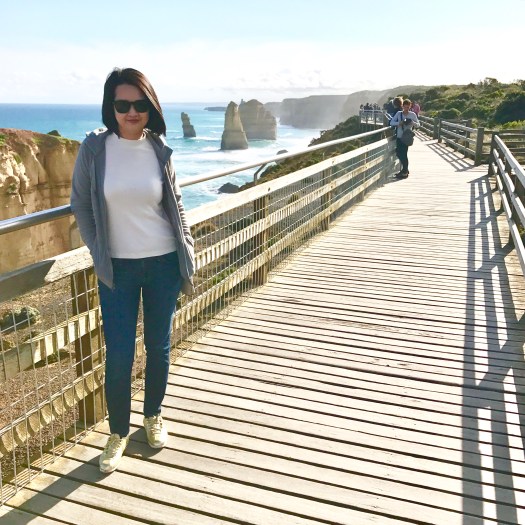
SEAB PSLE Syllabus Primary 3/4 English Tuition. Class doing Vocabulary, Grammar, Synthesis. Creative Writing. English Enrichment Classes and Group Tuition.Punggol Waterway English Tuition PSLE IP IB GCE IGCSE SAP Tuition by Top RJC, ACJC, SAJC, TPJC TutorsTutor Yuet Ling LV Takashimaya. SGP.Tutor Yuet Ling at LV MBSTutor Yuet Ling Stalactites Restaurant Melbourne CBD AustraliaTutor Yuet Ling at the 12 Apostles, Australia
Free English PSLE and Primary Lesson from eduKate Tuition Centre Singapore. Online Lessons and Tips. Here’s some Right or Wrong English usage in our English Tuition classes. Grammar usage and correcting your child in Primary school in Singapore before it turns into a habit and making sure they have an excellent English education.
During our English tuition classes, we hear these English sentences used frequently both in conversation and writing. So let’s correct some of the common ones and here’s an English grammar mistake that stands out.
“Me and my friend” or “I and my friend”?
So which is the right sentence? “Me and my friend wants to go to Mee Toh Primary School” or “I and my friend wants to go to Mee Toh Primary School?”
Well, the latter.
Reason: “I” is the subject of the sentence. Your friend becomes the accompanying person and the subject is “going to Mee Toh Primary School”. The first sentence makes “Me” the subject, and it is wrong to call yourself “Me” as the subject, making the sentence grammatically wrong. However, we can use “Me” as the object. i.e. “Mee Toh Primary School has accepted me and my friend”
So what about “My friend and I” versus “I and my friend”?
Both are grammatically correct, but whenever someone corrects you and say the former is correct, then it is contestable. It is, however, polite to use “My friend and I” so even though both are correct, choose “My friend and I” because we all want to sound clever and polite don’t we?
Conclusion:
when you are the subject: use “I”
when you are the object: use “me”
be polite and put yourself last if using “My friend and I”
So that’s an English lesson from eduKate Tuition Centre. Hope you enjoyed it and for our more information of our English tuition, Creative Writing and enrichment classes, call Yuet Ling +65 8222 6327 for all our schedules.
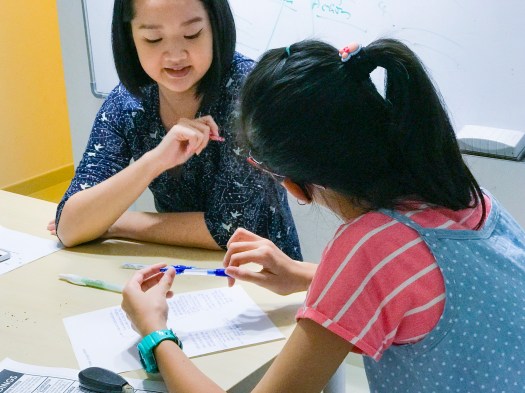
eduKateSG Tuition Centre Primary Students at Prive Punggol SingaporeTutor Yuet Ling teaching a PSLE Creative Writing class. It is all about the students’ progress. Give it a go, organise their thoughts and arm them with the best knowledge.Our Primary English Class working on materials for Creative Writing. Content is the meat of the story.PSLE English Tuition with Yuet Ling doing Cloze Passages.Yuet Ling in Melbourne CBD touring the City, Australia.Tutor Yuet Ling LV Takashimaya. SGP.Tutor Yuet Ling Stalactites Restaurant Melbourne CBD AustraliaTutor Yuet Ling at 12 Apostles Great Ocean Road, Victoria, Australia
Tutor Yuet Ling on holiday in Melbourne Australia, Torquay Beach breakfastPunggol Tutor Yuet Ling in Melbourne Australia on the Great Ocean Roadeducation singapore PSLE Top English Tuition Singapore singapore education system english tuition in singapore
These are the top 10 English used in the world and eduKate Tuition Centre finds entry 9. to be pretty interesting. The word “Have” as a more common word than “I” is a concept that intrigues us. Wonder how it is so. If anyone can figure out why Have is in front of I, drop us a message and see if you can explain it.
(source of list from Oxford Concise Dictionary)
P6 eduKate Students at eduKate Tuition Centre goes to Climb Central for eduKate Holistic Programme. Top 10 English words used in the world
Interested in our English Tuition classes?
Kindly contact us to arrange for a top English tutorial:
Office +65 6638 8814
Punggol +65 8222 6327
email: admin@edukatesg.com
Tutor Yuet Ling teaching a PSLE Creative Writing class. It is all about the students’ progress. Give it a go, organise their thoughts and arm them with the best knowledge.Tutor Yuet Ling in Melbourne, Australia.Cape Otway.Tutor Yuet Ling at St Kilda’s, Melbourne, AustraliaTutor Yuet Ling in Melbourne, Australia. Primary English PSLE Tuition Programme.Punggol Tuition Centre for English Math and Science
Recently I came upon a conversation with Dr Sholpan about English language lessons for International students that are from non-English background, having classes with our students that are from Russia, Kazakhstan, China, Korea, Japan, Thailand, Nepal, Bhutan etc. We discussed and evaluated our classes for non-English speaking students that comes to Singapore to study in international schools.
The common language of English suddenly seems not so common after all for these students that study primarily in their own national language before they come over to Singapore and generally have a weak command of English. They are then faced with the prospect of learning their curriculum in a foreign language that they do not have full mastery over, creating a stress of learning a new language and also to do well in school.
They face the problems of subjects being taught in “alien” English, meeting new friends in a social English speaking environment and then get back to work on their schoolwork in English. Daunting tasks for anyone in a foreign land with a foreign language. We can only imagine what it feels like being alienated, but to actually socialise and study as well would make it monumental.
another successful session where Kazakhstan English students learns about Singapore’s education system
So how do we tackle the problems that these students face? This is what we do for our foreign students, and its been a lot of trial and errors, and we have been accumulating our experience with every new student and fine tuning our lessons to make sure they learn English in the fastest pace possible.
Their first problem will be to get as much friends as soon as possible. This is counter intuitive and not a lot of teachers will do this. The usual priority of almost all teachers are to get international students a formal start to English, i.e. grammar, sentence structure, subject-verb agreement, vocabulary, synthesis, comprehension/oral/composition exercises.
That is fine if we are trying to teach a primary school child that does not need to worry about heavy technical terms, no worries of getting to know new friends in a complex teenager environment as fast as possible, and no worries of having a conversation with teachers to get themselves as much help as possible.
So once they come for our classes, we don’t push them towards a “formal” English class format. We keep it simple, friendly, and useful. They learn English that they can use everyday, in every situation that they will find themselves in. Basically the solution that we advocate will be one that integrates them into the “English” speaking system as fast as possible.
Teach them English that is used in our common conversation. Words and phrases like a simple “Hi!”, “Thank you!”, “Can you please help me?”, “Sorry, but I don’t quite understand”, “How much is this?”, Where can I find this place?” etc. We never underestimate the usefulness of simple English. It is the most important start for anyone that does not communicate primarily in English.
We flew in from London for the week 2 English Class.
Useful phrases that they can use to get them further down the path to socially integrate them with their peers and colleagues plus get them more help from people that they meet. Keep everything informal and look at it from the perspective that they will learn more English from their friends and school, and our initial job is to kick start that process. The faster they can talk in English and make new friends in school, the faster they start learning English from their friends and teachers.
Currently, we can get them to do that in around 3-4 months of intensive classes. It is amazing how fast they can go from a miserly “Hello!”, to a full sentence of “Hi! We are studying Pythagoras’ Theorem in school and there is a test next week”. This happens by keeping things simple, useful, and relevant. They don’t need complex words or complex sythesized sentences strung together to impress the teachers, they need a conversation that they can understand straight off the bat and work from there. Learning from their friends, school, and community.
The next English class was full of top students and they love to know more of Singapore
Because they require a unique set of English lessons, we have to be creative, fine tuning every class and customise the lessons to the needs of each and every student and learn from our past experiences. We have to keep relevant, always, and as the students grow, we keep advancing them. Push them forward when they get too comfortable, and slow down when they feel too stressed. That is education. Adapt and equip them with skills and knowledge that will help them to thrive.
It is not the same for everyone, and we have to consider relevance too. What is relevant now, won’t be in the future. So we have to keep evaluating our classes to keep it up-to-date with current phrases, and keep on helping the students to make sure they do their best. That’s our job as educationists.
Tampines English Tuition PSLE IP IB GCE IGCSE SAP Tuition by Top RJC, ACJC, SAJC, TPJC Tutors
eduKate Tuition Centre is in London, UK and Almaty Kazakhstan for November 2015. Part of our operation are at our partner’s training centre in Almaty, Kazakhstan and another in UK doing their R&D and upgrades to curriculum for year 2016.
Our annual end-of-the-year programme this year is a bit special. We are meeting our overseas students and our partners at Almaty. We are also in London, Cambridge, Stratford-upon-Avon, Oxford and Manchester to do our R&D. We are looking at upgrades to our curriculum and we are very interested in getting some expertise in internet education which will fit in nicely with our partners that are interested in our training sessions online.
Singapore to Kazakhstan and UK.
eduKate Singapore Tuition Centre at Almaty, Kazakhstan International Airport together with our partner iDDRIVE’s management and staff.
It’s that time of the year again where some of us runs off and find new ways to teach our students. And some of us are required to teach our overseas students outstation, as we have our overseas partners handling our international students’ requirements. Also, we constantly get our staff into exchange programmes and find out what problems that our partners encounter. Of course, we would love to have our staff learn more about our partners overseas.
eduKate Singapore Tuition Centre at Almaty, Kazakhstan International Airport together with our partner iDDRIVE’s owner, management and staff.
Tutors at Almaty, Kazakhstan International Airport with our partners iDDrive.
eduKate Singapore Tuition Centre at Almaty, Kazakhstan English Tutorial Classes together with our partner iDDRIVE’s students and staff. It is a session, exchange of ideas and us talking about Singapore’s education. Another class where eduKate Singapore Tuition Centre are at Almaty, Kazakhstan English Tutorial Class together with our partner iDDRIVE’s students and staff. In session, eduKate Singapore Tuition Centre at Almaty, Kazakhstan English Tutorial Classes together with our partner iDDRIVE’s students and staff. They are very interested in talking about Singapore’s education. International exchanges like this helps eduKate Singapore understand the different types of education systems employed in every country. Kazakhstan students are heading to Singapore’s International schools and it is our initiative to tell them what to expect when they are here.
English Workshop (Tutorial Classes) and a talk about Singapore in Almaty, Kazakhstan.
Our whole overseas partnerships have an exchange programme where we find out what is the best way to teach and eduKate our students. It’s an annual idea to keep abreast with the times, and to come up with techniques that not only just develop the brain of a student, but also to build a rounded character. It is a psychological approach and it helps our students to do well in their school. Tuition is something we take seriously, and this overseas exchange programme is part of our endeavor to keep upgrading ourselves and our tutors.
Our eduKate owners goes to London, UK to research on the latest education techniques.
We are still in London and Kazakhstan so tune back in for newer updates
The Flexible Education System for the new gen Singaporean
Singapore’s education system has gone a long way the last 30 years where it was very much rigid and does not allow much flexibility from the norm. That has changed and our new system allows for diverse avenues to achieve an excellent education for an individual. It is a more diverse, forgiving and yet, higher quality education. 30 years ago, other countries like America made waves with child prodigies entering universities before they reached puberty, and right now, our system are starting to show the same education news every year of young Singaporeans doing amazing things in education, like that of Master Mark Sim.
We need to design flexibility into our education system, to allow for different avenues of growth and seed alternate talents to be harvested in the future. The next Colin Maclaurin, Pablo Picasso, or Nadia Comaneci doesn’t come from sitting in schools until they reach universities in their 20’s. They develop their talents at a very young age, and given the opportunity to develop it too. Being flexible provides small little crevasses that allows talents to thrive in, develop and mature. It is where ur society matures and we seek talents that paints the Singapore landscape into a diverse, multi-hue and capable society, providing an expert to every problem, enlarging the circle of knowledge that is required to thrive in the 21st Century.
We need to shift our education paradigm, to acknowledge that for a successful Singapore, we need a flexible world class education that allows individuals to thrive, and seed talents to mature to contribute to society. It is the way to go for a human resource dependent Singapore, and with bright sparks from our brightest minds that we see ourselves solve the future problems that will come our way.
Straits Times: Youngest Singaporean to score A in physics: 9-year-old boy ‘not born smart’
PUBLISHED
AUG 18, 2015, 4:00 PM SGT
SINGAPORE – With a chunky physics textbook laid out in front of him, Singaporean Mark Sim is a picture of cherubic enthusiasm as he flips through the pages, pointing out the topics he is particularly fond of.
“I like electricity, and oh, atomic physics because my dad explained to me how bombs work. Although I find the property of waves a little hard to understand…”
That caveat, tinged with child-like uncertainty, is a reminder that the soft-spoken Mark is all but nine years of age – but already believed to be the youngest person in the world to score an A in the International General Certificate of Secondary Education (IGCSE) physics examination.
The IGCSE is an internationally recognised qualification equivalent to the GCE O-levels.
Mark was eight years and three months old when he took the exam – consisting of three papers spread out over two days – at the British Council last November.
The feat earned him a place in the Singapore Book of Records when his result was ratified earlier this year.
“We tried to check with Cambridge if he was the youngest in the world, but they don’t keep such records,” Mark’s father, Mr Harry Sim Lim Onn, 48, told The Straits Times.
Mr Sim had originally intended for him to take the GCE O-level exam, but the Ministry of Education would not allow it as they had imposed an age limit in order for parents not to put undue stress on their children.
It cost Mr Sim $300 for his only child, now a Primary 3 pupil at Nanyang Primary, to take the exam. But he reckons it was money well spent.
Mr Sim, a Singapore permanent resident from Malacca who has lived here for 27 years and is married to Singaporean Wun Ju Sing, 46, revealed that Mark displayed a precocious talent for grasping basic physics concepts.
“I was explaining to him about acceleration and how my car differed from a Ferrari when he was six years old, and to my surprise, he understood,” said the section manager at a semi-conductor firm.
Mr Sim subsequently bought Mark a physics textbook, and the boy was hooked when he was told it was meant for students aged 15 years and above.
For a year leading up to the exam, Mark would study for half an hour every day on weekdays, while Mr Sim spent up to three hours on weekends coaching him.
But both parents, who graduated from the National University of Singapore with bachelor degrees, were keen to stress that Mark was unlike the usual geniuses who were born smart.
Singaporean prodigy Ainan Cawley, for instance, set a world record at seven when he passed his chemistry O-levels in 2007.
“It took Mark a lot of hard work and determination, along with a commitment on my part to allow him to focus on something he was really good at,” said Mr Sim.
“His English was not very good to begin with and he had to make an extra effort to improve in order to fully understand the questions.”
In fact, Mark’s growing up years were a source of constant worry for his parents, who feared that he might have been slower than other children.
“Our maid warned us not to expect too much from Mark; for example, he could not roll over on his own until he was nine months old,” revealed Mr Sim, who has written a book about his parenting experiences.
“He was also constantly at the last of his class in kindergarten.”
Madam Wun, an accountant-turned-housewife, supervises Mark’s daily schedule and coaches him on other subjects such as English and Mathematics. She is also his constant “sparring partner” in chess.
Mark was previously a member of Singapore’s national junior chess squad, but he left last year in order to concentrate on preparing for his physics exam.
And Madam Wun says that her son also enjoys computer games and travelling overseas – his small but tidy bedroom is filled with books a child his age would read, while he is also a huge fan of the film Minions.
“He has been getting attention in school and his classmates know of what he has done, but we try to keep him grounded and down-to-earth,” she added.
So what’s next for Mark?
There are plans for him to take the A-level physics exam within the next two years, although Mr Sim is wary of the demands of such an undertaking.
“Mark was the one who suggested it. He dragged me to the bookstore and made me buy the A-level physics textbook,” he said. “We’ll take it slow but he should have no problems scoring a B or C with the right preparation.”
Preparing for PSLE means we make sure our students can master the needed techniques to answer questions for PSLE Science. Primary 6 Science Tuition for Punggol be eduKate Singapore is specifically developed for students to master and score using the latest SEAB MOE syllabus. We teach from basics, and then to mastery of topic and making sure they score an A for their PSLE. We do that by making sure they answer scientifically and getting every mark by proving all the keywords.
Keywords and explanation are key to scoring A* for Science
We tell our students this: MAKE SURE YOU TALK THE TALK TO WALK THE WALK. Which sort of translates to, scoring for science means thinking and talking like a scientist. Jargon included. Creating that mindset is the first big breakthrough to scoring that A*. It is also assimilation and creatively applying their knowledge to a myriad of questions that tests their holistic understanding. That is the new directives of MOE and SEAB and it will translate into the PSLE. It is also a change in mindset from the previous exams, and this means students that shows that they are little scientists in the making will be handsomely rewarded in their exams.
For lessons and schedules of our Punggol classes, contact Yuet Ling at +65 8222 6327 as she’s the boss over there. Well, she will definitely get your child the grades because she’s been at this for years and her kids improve tremendously. Cheers!
eduKate Punggol P6 Class doing PSLE MOE ScienceeduKateSG Primary Students at Punggol Tuition Centre Prive Condominium doing PSLE SEAB Syllabus English Lower Primary 3 and 4eduKateSG Tuition Centre Primary Students at Prive Punggol SingaporeTuition classes offered at our eduKate Punggol/Sengkang Tuition Centre and eduKate Tampines Tuition Centre in Singapore: PSLE GCE IGCSE
Singapore has the smartest kids and here’s what CNN said. It is what we all believed in all this time and more. Definitely been making waves last few years as Singapore is also getting noticed for being 2nd in Global Competitiveness http://www.weforum.org/reports/global-competitiveness-report-2015-2016. Not too shabby for the little Red Dot. Proudly Singaporean and more to come.
Singapore (CNN)It’s a world-class teacher’s pet — a straight-A student that’s top of the class: Singapore is officially the country with the smartest high-school kids in the world.
The country’s academic success has helped it become a thriving economy, and the way it has built its education system could hold lessons for the rest of the world.
“Singapore is a fascinating case,” said Marc Tucker, the president of the U.S. National Center on Education and the Economy. “[It] was a major British port before the Second World War. When Britain got out and closed its base Singapore was in terrible shape.
“Now today they are one of the best performing economies in the entire world. They did it largely with education and training.”
If Singapore’s rags-to-riches transition was built on education, the secret of its education system is the quality of its teachers. “They source their teachers from among the best kids coming out of their high schools,” explained Tucker.
‘Creative use of knowledge’
In the post-war years, Singapore had a low-cost, low-skill labor market, and it was enough for its education system to aim for universal literacy. But starting in the 1970s, Singapore’s economic needs shifted. It was quickly moving toward high tech, white collar jobs and the education system needed to keep up. Soon, the aim was for a world-class education for every single child, and that meant moving on from rote learning to encouraging creativity.
“They had a drilling system when that was the only option — they had to expand education quickly,” said the OECD’s education director, Andreas Schleicher. “But as they had achieved this, they were the first to think about, what is it that our children need to be successful … (in) tomorrow’s economy?
“One thing that’s been clear to them is that the world economy no longer rewards people just for what they know. Google knows everything. The world economy rewards people for what they can do with what they know.
“The emphasis on the application, the creative use of knowledge is very, very strong in Singapore and other Asian countries.”
The importance of education is instilled at a young age — before children even get to primary school.
“I think for us as preschool educators, we are the foundation years,” said Diana Ong, principal at Pat’s Schoolhouse Sembawang Country Club, a preschool in the north of Singapore. “We form the basic foundation.
“I think the first years of a child’s life is very important. So when you have a very confident child, that child’s confidence will carry him or her through primary school as well. Not only do you want a child that is smart, you want a child who is resilient.”
Schleicher says it’s part of the culture of many Asian countries for parents to prioritize their children’s education.
“It starts with resources, the priority they assign to education,” he explained. “In these countries, parents and grandparents are going to invest their last resources, their last money into … the education of their children.
“This is sort of a question of priorities. You can see in all tiers of public policy, education comes first. That’s your future.”
Education in Kazakhstan for Secondary Mathematics. Grade 7-10 Mathematics for Haileybury Almaty, Miras International for IGCSE, IB. Tutorial Classes in Kazakhstan conducted in English Language by Singaporean tutors. This is the outline for Algebra Module at eduKateSg. An education for Mathematics in Kazakhstan by Singapore Tutors. Course Curriculum and Syllabus requires Grade 6 Algebra as previous knowledge and should be revised prior to attendance of this class. Tutors for this class are to teach and guide the following Algebra Class with the following aims for students:
To understand the use of algebra as replacement for numbers
To understand that algebra can be used asa a function of calculation
To understand that algebra can be used to solve problem sums
To appreciate different manipulations and techniques
To apply its use to other subjects like Physics and Chemistry
To attempt tough questions applied in school examinations
Kindly contact our course provider iDDRIVE Centre on WhatsApp (in Russian) +65 9376 5417 for our Mathematics tutorials.
Expansion
Basic Expansion
x(a+b)
Further Algebraic Expansions
(x+a)(x+b)
(x+a)²
Factorisation
Basic Factorisation
8x+2=2(4x+1)
Quadratic Factorisation
x²-4
x²+6x+8
Grouping
x+xy+2y+2y²
Algebraic Manipulation
Simplifying Algebraic Fractions
15x²/20x³
3d-6/d²+d-6
Simplify Algebraic Fractions Multiplication
Simplify Algebraic Fractions Addition and Subraction
Equations
Simple equations
Algebraic Fractions Equations
Quadratic Equations and Roots
Problem Sums for Quadratic Equations
Changing the Subject of the Formula in linear and quadratic
Mathematics Secondary Tuition Classes at eduKate SG
Mathematics, daunting to some, pleasurable to others. Polarising it might be, Mathematics can be conquered with the right attitude and guidance. We teach from scratch, with the attitude that we teach the best methods, and we lower the level of complexities into understandable steps for you. Small baby coherent steps when learning which will empower you. We teach using the easy route. We will not make anything into incomprehensible technical jargon. Students must understand before they attempt Mathematics. We build the understanding by teaching everything in our Maths tutorial class.
TEACH TO UNDERSTAND,
LOWER THE STRESS,
BE IN CONTROL,
EMPOWER YOURSELF.
We make sure you understand all Math methodology, broken down into easy steps and move onto the point where doing the most difficult Math problem sums are easy to you. When we lower your stress levels, you study Maths better and you learn better. Its all wholesome goodness once you know what your are doing when attempting Math questions and in total control of your studies. Get into the driver’s seat and take control of your future. We will show you how.
Close Monitoring of Progress
We highly value our teacher to student interface, making sure students improve through our constant monitoring of their work and development. We make sure the parents are updated as well, and this close-loop teaching system helps us customise our teaching methods to the different needs of the students. We know no two students are the same with different studying habits, needs and characteristics. We keep a profile of every student and make sure we focus on their positives, whilst continuously eliminating their negatives.
We make sure our students do Mathematics by being neat and logical. All steps are accounted for and written clearly for maximum marks and no silly mistakes or deduction of marks.
CLEAR GOALS TO GREAT ACHIEVEMENTS
We set off with the clear goal that what we teach, has to be understood by the students. It is tenet of education. To facilitate learning, it must first be understood. Knowledge must first and foremost be digestible, inclusive and useful to students. Knowledge is food for the mind and the soul. Otherwise, it will just be garbage floating around one’s brain with no anchor to hold its weight. Useless, and mind numbing teaching does not make an intelligent student. In our tutorial classes, we help students to understand everything put forth in their curriculum. We teach from ground up. The best way possible. The easiest way possible and let students grow upon the solidity of what has been learnt.
Our Friendly Tutors
Our tutors know each and every student that goes to our tuition centres. Every one of them. It is our duty to know them well and be a tight group. That sets forth an important requirement of what we want to achieve, learning is not just about a student and a book, it is about the process of learning, the social interaction between teachers and students,( as well as with other fellow students) and the environment that they study in. We keep all these elements in our sights, and we create a conducive culture for students to learn in, fitting the pieces of a puzzle until the last piece clocks into place and the picture is complete. Holistic education is a genetic code written into our tuition centre’s teaching system.
How we teach Singapore Math for Secondary?
Secondary E Mathematics is set up such that Express students studies 4 years of progressive mathematics. We build the knowledge year upon year, racing hard and winning each and every year. Distinctions in O levels shall be the final prize. Every academic year has their own challenges, and we will guide students towards a spectacular secondary education. Taking into consideration that we have 17 years of full time experience teaching this subject, we have expert knowledge of teaching the finest Mathematics programme in Singapore. Teaching from basics and getting up to the point of world class mastery, we give it our best and that really matters in helping our students. With time, that would make all the difference to their studies. Small changes but in large quantities makes something good into something great.
We have a substantial list of A* students that dates all the way back to 1998, and the very first few students of ours got his post graduate Masters a few years back and has a very exciting career being a senior executive position. That’s what makes us proud, because at the end of it all, we educate students to be world citizens and have an awesome life. Secondary education is but a journey along that path, and our experience suggests that we are more than up to the challenge of getting distinctions for our students.
With our happy dynamic tutors giving a complete education, students will overcome and achieve their full potential. Come down and have a talk with our tutors, as they will show you how we go about our lessons and give you a sample of how crystal clear our teaching methodology can be.















 Singapore Mathematics Tuition Centre